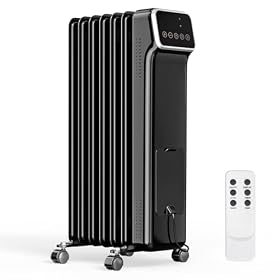
After an HVAC outage, the right space heater depends on the room you need to warm, available electrical capacity, and safe operating conditions. Use this guide to choose a practical temporary heater without overloading a circuit.
A space heater can provide temporary heat after an HVAC outage, but choose one based on the room you need to occupy, the electrical circuit available, and how long you expect to use it. For most situations, a thermostat-controlled heater with tip-over and overheat protection is the practical starting point. If the outage affects the whole home or involves severe weather, treat the heater as supplemental heat—not a substitute for a safe emergency plan.
Start with the room, not the heater
Close doors to unused rooms and heat the smallest occupied space that is safe and comfortable. A heater that seems inadequate in an open floor plan may work well in a closed bedroom or office.
Consider:
Room size and ceiling height: Larger rooms, high ceilings, poor insulation, and drafty windows require more heating capacity.
How long the room must stay warm: A short-term morning warm-up is different from heating a room continuously overnight.
Occupancy: A bedroom, nursery, bathroom, and workspace have different safety and comfort needs.
Existing heat sources: Sunlight, other occupied rooms, and insulation can reduce the heater’s workload.
A heater’s wattage is a better indicator of electrical demand than its marketing description. Coverage-area claims can vary with insulation, outdoor temperature, ceiling height, and room layout, so use them as estimates rather than guarantees.
Understand wattage and circuit limits
Many portable electric heaters offer a high setting around 1,500 watts, although the exact settings vary by model. At 120 volts, 1,500 watts draws about 12.5 amps. That can use most of the capacity of a typical 15-amp household circuit, especially if lights, computers, refrigerators, or other appliances share it.
Before operating a heater:
Identify what else is plugged into the same circuit.
Use the heater’s lower setting if it provides enough warmth.
Do not run another high-power appliance from the same circuit.
Stop if the breaker trips, the plug feels hot, or you notice a burning smell, discoloration, buzzing, or a loose receptacle.
Never defeat a breaker or repeatedly reset one that trips. If the outlet or wiring shows heat damage, stop using it and have a qualified electrician inspect it. Follow the heater manufacturer’s instructions for electrical requirements.
Product prices and availability are accurate as of the date/time indicated and are subject to change. Any price and availability information displayed on Amazon.com at the time of purchase will apply to the purchase of this product.
Choose the heater type for your situation
Ceramic fan heater
A ceramic heater with a fan warms the air quickly and is useful when you need immediate heat in a small or medium room. The fan creates some noise and may feel dry or drafty. Keep the air intake and outlet clear, and do not place clothing or bedding near the airflow.
Oil-filled radiator
An oil-filled radiator heats more gradually but provides steady, quiet warmth. Its surface remains hot, so it needs generous clearance from bedding, curtains, furniture, children, and pets. It is better suited to sustained room heating than rapid spot heating.
Infrared or radiant heater
A radiant heater can make people and nearby objects feel warm without heating all the air in a room as quickly. It works best when aimed at occupants with a clear space in front of it. Do not assume a radiant heater is safe to place closer to furniture; required clearances still apply.
Small personal heater
A low-wattage personal heater may be appropriate for a desk or a small enclosed area, but it may not maintain a comfortable temperature throughout a room. Check the operating instructions before using one in a bathroom or other damp location. Many standard portable heaters are not approved for wet areas.
Product prices and availability are accurate as of the date/time indicated and are subject to change. Any price and availability information displayed on Amazon.com at the time of purchase will apply to the purchase of this product.
Features worth prioritizing
Look for features that reduce operating mistakes rather than features that simply add convenience:
Adjustable heat settings: A lower setting can reduce circuit load and prevent overheating the room.
Thermostatic control: The heater cycles on and off to maintain a selected temperature instead of running continuously.
Tip-over shutoff: The unit turns off if it is knocked over, but this does not replace proper placement.
Overheat protection: An internal safety control can shut the heater down if temperatures become abnormal.
A stable base: A broad, level footprint is important around pets, children, and foot traffic.
A visible power switch:Simple controls are helpful during an outage or in a dim room.
A timer, if appropriate: A timer can limit operation, but do not rely on it to make unattended or overnight use safe unless the manufacturer specifically permits that use.
A remote control, app connection, or display may be convenient, but none of these features compensates for an overloaded circuit, blocked airflow, or unsafe placement.
Product prices and availability are accurate as of the date/time indicated and are subject to change. Any price and availability information displayed on Amazon.com at the time of purchase will apply to the purchase of this product.
Place the heater safely
Put the heater on a level, hard, nonflammable surface where it cannot be knocked over. Keep the clearance specified by the manufacturer—particularly around the front, sides, top, and air intake. As a conservative rule, keep portable heaters well away from curtains, bedding, upholstered furniture, paper, clothing, and rugs unless the manual gives a different arrangement for the specific model.
Use these operating rules:
Plug the heater directly into a wall outlet.
Do not use a power strip, surge protector, or extension cord unless the manufacturer explicitly permits it and the cord is properly rated.
Keep the cord out of walkways and away from hot surfaces.
Never cover the heater or use it to dry clothing.
Keep children and pets away from the unit.
Do not leave a portable heater operating while sleeping or when no responsible adult is present unless the manufacturer’s instructions specifically address that use; the most conservative choice is to turn it off.
Keep smoke alarms working and do not block exits.
Never use a fuel-burning heater indoors unless it is specifically designed and approved for indoor use and is operated exactly as directed. Never use a grill, camp stove, patio heater, or generator inside a home, garage, basement, or enclosed porch. Carbon monoxide can build up without warning.
Plan around the HVAC outage
A portable heater is usually most useful when paired with a simple heat-retention plan:
Close windows and exterior doors.
Block obvious drafts temporarily without covering heaters, vents, or exits.
Close doors to unoccupied rooms.
Use blankets and warm clothing rather than raising the heater to its highest setting.
Protect plumbing if freezing temperatures are expected, following local utility or professional guidance.
Check on children, older adults, and anyone with medical vulnerabilities.
If the outage is caused by a storm, flooding, damaged wiring, or a utility emergency, do not use an outlet that has been wet or damaged. Contact the utility company or a qualified professional before restoring power to affected equipment.
When a space heater is not enough
A portable heater may be a poor choice if the room is very large, the home has severe drafts, the available circuit cannot support it safely, or the outage is expected to last for an extended period. It is also not a substitute for a working furnace in freezing conditions when pipes or vulnerable occupants are at risk.
Consider relocating to a safe heated space, contacting your utility provider or emergency services, or arranging professional temporary heat. If you need several heaters, a qualified electrician should evaluate circuit capacity before you operate them. Do not connect a heater to a generator unless the generator, transfer equipment, and connection method are installed and used according to manufacturer instructions and applicable electrical requirements.
Bottom line
For a temporary HVAC outage, choose a heater with a thermostat, adjustable settings, tip-over shutoff, overheat protection, and a stable base. Match its wattage to the circuit—not just the room—and use it in a closed, occupied room with clearances and direct wall-outlet access. If the outlet trips, the cord or plug heats up, or the space cannot be kept safe and warm, stop using the heater and choose a safer temporary arrangement.
FAQ
What wattage space heater should I buy after an HVAC outage?
Choose wattage based on the room and the circuit. Many portable heaters have a high setting near 1,500 watts, which can draw most of a typical 15-amp circuit. Check what else shares the circuit and use a lower setting when possible.
Can I plug a space heater into an extension cord or power strip?
Plug it directly into a wall outlet unless the manufacturer specifically allows another connection method. Extension cords and power strips can overheat under a heater’s sustained load.
Is an oil-filled radiator safer than a ceramic heater?
Neither type is automatically safe when misused. Oil-filled radiators are quiet and provide gradual, steady heat, while ceramic fan heaters warm air quickly. Both require proper clearance, a stable surface, direct wall-outlet connection, and supervision.
Can I run a space heater overnight during a heating outage?
The most conservative choice is to turn it off before sleeping. Follow the specific manual, maintain all clearances, keep smoke alarms operational, and never use a heater with a damaged cord, hot plug, blocked airflow, or unstable placement.