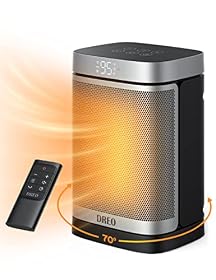
Two typical 1,500-watt space heaters usually cannot safely share a standard 15- or 20-amp circuit. Check the heaters’ wattage, the circuit rating, and every other device connected before deciding.
What do you need help with?
Open an answer, or tell us what we should cover next.
Answered in this guide
Decide whether two space heaters can share one circuit
Usually no: two typical 1,500-watt heaters can exceed the safe capacity of a standard 15- or 20-amp circuit, especially when other appliances are running on it.
Check each heater’s label or manual for its wattage, or use the listed amperage when provided. This gives you the electrical load each heater adds to the circuit.
Look at the circuit breaker or fuse to identify whether the circuit is rated for 15 or 20 amps. Do not remove electrical panel covers to find this information.
Account for other high-draw devices on the same circuit, including microwaves, refrigerators, hair dryers, toaster ovens, and coffee makers, before running a heater.
Request a topic and help us choose what to build next.
Have a dedicated circuit installed for two heaters
Choose a lower-wattage heater for the circuit
Diagnose why a heater keeps tripping a breaker
Requests help us prioritize the next guide. No email required.
One anonymous request per topic.
Two space heaters can share a circuit only if their combined electrical load stays within the circuit’s safe capacity—and in many homes, two typical 1,500-watt heaters exceed it. At 120 volts, a 1,500-watt heater draws about 12.5 amps, so two of them would draw roughly 25 amps before counting lights, appliances, or other outlets on the same circuit.
The safest approach is to identify the circuit rating, add the heaters’ current draw, account for other loads, and avoid power strips or extension cords. If the combined load is too high, use a different circuit or heat only one room at a time.
Check each heater’s wattage
Look at the heater’s label or owner’s manual for its wattage. If it lists amps instead, use that number directly. For a 120-volt heater, the approximate current is:
Amps = watts ÷ 120
Typical examples:
1,500 watts: about 12.5 amps
1,200 watts: about 10 amps
1,000 watts: about 8.3 amps
750 watts: about 6.25 amps
Two 1,500-watt heaters would require approximately 25 amps together. Two 750-watt heaters would require approximately 12.5 amps, but that does not automatically make the arrangement safe because other devices may share the circuit.
A heater’s lower setting may draw less power, but do not assume the circuit is safe unless you know the wattage at that setting. Thermostatic cycling also should not be used as a reason to size a circuit below the heaters’ rated load.
Identify the circuit’s rating
Most household branch circuits serving ordinary receptacles are rated at either 15 or 20 amps. The circuit rating is normally printed on the circuit breaker or fuse, but do not remove the electrical panel cover to inspect wiring. If the breaker is labeled unclearly, ask a qualified electrician.
The rating of the circuit is not always the same as the rating printed on an outlet. Several outlets and lights may be connected to one breaker, including outlets in nearby rooms. A heater plugged into one receptacle can therefore share a circuit with equipment plugged in elsewhere.
As a conservative general rule, avoid planning to run portable heaters at the full rating of a household circuit for extended periods. Electrical codes and local requirements can treat continuous loads differently, and the exact calculation depends on the installation. A qualified electrician can confirm whether a circuit is suitable.
Product prices and availability are accurate as of the date/time indicated and are subject to change. Any price and availability information displayed on Amazon.com at the time of purchase will apply to the purchase of this product.
Why two common heaters usually do not work on one circuit
On a 15-amp circuit, one 1,500-watt heater already uses most of the circuit’s capacity. On a 20-amp circuit, it still leaves limited capacity for anything else. Two typical heaters exceed both ratings.
The breaker may trip when the circuit is overloaded, but a breaker should not be treated as a normal load-management device. Repeated trips indicate that the circuit needs a lower load or professional evaluation. A warm outlet, plug, or wall plate is an additional warning sign and should be taken seriously.
Never replace a breaker with one rated for more amps unless a qualified electrician verifies that the wiring and entire circuit are designed for that rating. A larger breaker on undersized wiring can create a fire hazard.
Product prices and availability are accurate as of the date/time indicated and are subject to change. Any price and availability information displayed on Amazon.com at the time of purchase will apply to the purchase of this product.
Check what else shares the circuit
Before using a heater, consider other high-draw devices that may be on the same circuit, such as:
Refrigerators or freezers
Microwaves and toaster ovens
Hair dryers and curling irons
Coffee makers
Vacuum cleaners
Computers, monitors, and laser printers
Other heaters, fans, or heating appliances
You may be able to identify the circuit by turning off the suspected breaker and checking which outlets and lights stop working. Do this only from a safe position, and do not open the panel or touch wiring. A plug-in circuit tester can help identify whether an outlet is energized, but it does not determine the full load or confirm that wiring is safe.
Use separate circuits only when they are actually separate
Two heaters may be usable in the same home if they are connected to separate, suitable branch circuits. Plugging them into two outlets on opposite walls does not prove that they are on separate circuits; both outlets may be supplied by the same breaker.
If you need to run heaters in different rooms, identify the breakers that control those outlets and avoid adding other heavy loads to either circuit. When in doubt, have an electrician verify the circuits.
Do not use a power strip or extension cord
Portable space heaters should generally be plugged directly into a properly installed wall outlet, following the heater manufacturer’s instructions. Do not connect a heater to a power strip, surge protector, multi-plug adapter, or extension cord unless the manufacturer specifically permits it and the device is appropriately rated.
These accessories can overheat, especially when a heater operates for long periods. Do not use a loose, damaged, discolored, hot, or cracked receptacle. Keep the heater’s plug fully inserted and stop using the heater if the plug or outlet becomes warm.
Safer ways to reduce the electrical load
If two full-power heaters overload the available circuit, consider these options:
Run only one heater at a time. Close doors and reduce drafts so the heater works in the occupied room.
Use a lower wattage setting or heater. Confirm the actual wattage on the label rather than relying only on the setting name.
Use a separate, verified circuit. Move one heater only if the other circuit can support it and does not already carry heavy loads.
Improve room efficiency. Seal obvious drafts, close windows, and use curtains without blocking the heater’s required clearances.
Ask an electrician about a dedicated circuit. This may be appropriate when supplemental heat is needed regularly.
An oil-filled radiator can provide steady heat but does not automatically use less electricity at the same wattage. A ceramic heater may have different controls or heating modes, but its circuit demand is still determined by its actual wattage.
Stop and get help if you notice these warning signs
Turn off the heater and unplug it if safe to do so if you notice a burning smell, buzzing, scorch marks, discoloration, melting, a hot plug or outlet, flickering lights, or repeated breaker trips. Do not keep resetting the breaker to continue using the heater.
Contact a qualified electrician if the circuit trips with one heater, you cannot determine which outlets share a circuit, the receptacle is loose or damaged, or the home has older or visibly deteriorated wiring. Follow the heater manual and local electrical requirements, especially in older homes, mobile homes, garages, and areas with moisture.
Bottom line
Two typical 1,500-watt space heaters should not share a standard 15- or 20-amp, 120-volt circuit. Lower-wattage heaters may fit within a circuit’s capacity, but you must include every other connected load and use direct wall outlets. If the circuit rating or wiring is uncertain, use one heater or consult a qualified electrician rather than relying on breaker trips or extension cords.
FAQ
Can two 1,500-watt space heaters run on a 20-amp circuit?
Usually no. At 120 volts, each 1,500-watt heater draws about 12.5 amps, so two require approximately 25 amps before other devices are counted. Use separate suitable circuits or run only one heater.
Can two 750-watt heaters share a 15-amp circuit?
Two 750-watt heaters draw about 12.5 amps together at 120 volts, but other devices on the circuit also count. They should be plugged directly into wall outlets, and the arrangement should not be used if the circuit is already heavily loaded or the wiring condition is uncertain.
Can I plug one space heater into each outlet of a duplex receptacle?
Not necessarily. Both outlets on a duplex receptacle commonly share the same circuit, so using both does not double the available capacity. Check the breaker and the other outlets connected to that circuit.
Is it safe to use an extension cord for a space heater?
Space heaters should generally be plugged directly into a properly installed wall outlet. Avoid extension cords, power strips, surge protectors, and plug adapters unless the manufacturer specifically allows the arrangement and all equipment is appropriately rated.
What should I do if the breaker trips when a space heater runs?
Turn off and unplug the heater, then identify other loads on the circuit. Do not repeatedly reset the breaker or install a larger breaker. If one heater trips the circuit, or if the outlet becomes hot or discolored, stop using it and contact a qualified electrician.