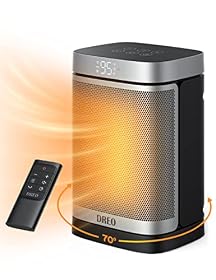
Digital and analog heater controls can both maintain a comfortable room temperature, but they differ in precision, programming, readability, and long-term simplicity. Here is how to choose between them.
A digital thermostat is usually the better choice if you want a specific temperature, a readable display, or scheduling features. An analog knob is often the better choice if you prefer simple controls, fewer electronics, and quick manual adjustment. Neither control type automatically makes a heater more powerful or more energy efficient; room size, wattage, insulation, and operating habits matter more.
How the two thermostat types work
Both controls regulate heat by switching the heating element on and off as the room temperature changes. The main difference is how you select the target temperature and how the heater measures and displays it.
Digital thermostat
A digital heater typically uses buttons or a touch control to select a target temperature. A temperature sensor then tells the heater when to cycle on and off. Many digital models also include a display, timer, remote control, or programmable schedule, although features vary by model.
The display may show the selected temperature, the sensed room temperature, or both. Check the manual because a number on the screen does not always mean the heater is measuring the room at that exact location or with laboratory-level accuracy.
Analog knob
An analog heater uses a dial, commonly marked from low to high or with approximate temperature settings. Turning the knob changes the thermostat threshold. The markings are often less precise than a digital temperature setting, and the actual room temperature may vary with heater placement, drafts, and the sensor's location.
Analog controls are straightforward: turn the dial until the heater cycles at a comfortable setting. They generally do not provide a precise temperature readout or built-in scheduling unless the heater has separate controls.
Digital thermostat versus analog knob: key differences
Feature
Digital thermostat
Analog knob
Temperature selection
Specific numerical setting on many models
Approximate dial setting
Readability
Usually easier to read from across the room
Depends on dial markings and lighting
Scheduling
Often available, but not guaranteed
Uncommon
Manual adjustment
Requires buttons or electronic controls
Very quick and simple
Electronics
More control circuitry and display components
Simpler control system
Best for
Precise comfort and repeatable settings
Basic, hands-on operation
Energy savings
Depends on settings and runtime, not the display alone
Can save energy when manually turned down or switched off
Product prices and availability are accurate as of the date/time indicated and are subject to change. Any price and availability information displayed on Amazon.com at the time of purchase will apply to the purchase of this product.
Which type controls temperature more accurately?
Digital controls generally make it easier to choose a repeatable target, such as 68°F or 70°F. That does not guarantee the room will remain exactly at that temperature. The heater's sensor may be near the warm housing, near the floor, or in another location that does not represent the whole room.
An analog knob can maintain a comfortable temperature, but its markings are usually less exact. Two heaters with similar-looking dials may respond differently, so you may need to adjust the knob over time.
For either type, placement matters. Keep the heater on a level, hard surface with its air intake and outlet clear. Avoid placing it directly beside a cold window, behind furniture, or where a draft can affect the sensor.
Product prices and availability are accurate as of the date/time indicated and are subject to change. Any price and availability information displayed on Amazon.com at the time of purchase will apply to the purchase of this product.
Does a digital thermostat use less electricity?
Not by itself. A digital display does not reduce the heating energy required to warm a room. A heater's electrical consumption is primarily determined by its operating wattage and how long the heating element runs.
A digital thermostat may help reduce runtime if it makes it easier to set a reasonable target temperature, use a timer, or avoid leaving the heater on unnecessarily. An analog heater can achieve similar savings when you turn it down or off consistently.
A simple way to compare operating cost is:
Energy used in kilowatt-hours = watts ÷ 1,000 × hours of operation
Actual runtime depends on insulation, outdoor temperature, room size, drafts, and the thermostat's cycling behavior. Use the heater's listed wattage and follow the manufacturer's instructions rather than assuming the control type determines efficiency.
Product prices and availability are accurate as of the date/time indicated and are subject to change. Any price and availability information displayed on Amazon.com at the time of purchase will apply to the purchase of this product.
When a digital thermostat is the better choice
Choose a digital thermostat when you:
Want to select a specific temperature rather than estimate with a dial
Need a display that is easy to read
Prefer a timer, schedule, or remote control
Move between rooms and want repeatable settings
Want to avoid repeatedly adjusting the heater by feel
Are heating a bedroom, office, or other room where consistent comfort matters
A digital control can also be helpful for users who have difficulty reading small or low-contrast analog markings. Look for a display and buttons that remain understandable in low light, and check whether the display can be dimmed if it would disturb sleep.
When an analog knob is the better choice
Choose an analog control when you:
Want the simplest possible operation
Prefer a quick physical adjustment
Do not need scheduling or a temperature readout
Want fewer electronic features to troubleshoot
Are buying a heater for occasional, hands-on use
Prefer controls that may remain usable during a display or button failure
An analog knob is not necessarily less capable of maintaining comfort. It simply gives you less numerical feedback and usually requires more trial and adjustment.
Important features beyond the thermostat
The thermostat should not be the only deciding factor. Also check for:
Wattage and room size
A higher-wattage heater can provide more heat, but it also uses more electricity while running. Choose a model appropriate for the room and the circuit. Do not use a heater to compensate for severe drafts, inadequate insulation, or a room larger than the manufacturer recommends.
Safety controls
Look for manufacturer-specified overheat protection and a tip-over switch where appropriate. Keep portable heaters at least three feet from bedding, curtains, furniture, clothing, and other combustible materials. Plug the heater directly into a suitable wall outlet unless the manufacturer specifically allows otherwise; avoid using an extension cord or power strip for a portable heater unless the instructions explicitly permit it.
Heat output and operating noise
Fan-forced ceramic heaters may warm a room quickly but can produce airflow noise. Oil-filled radiators usually warm more gradually and may continue giving off heat after the element cycles off. Thermostat style does not determine whether a heater is silent, fast, or slow.
Controls and recovery after a power interruption
Some digital heaters may reset, retain a setting, or require manual restart after power is interrupted. Check the product manual if automatic restart matters. A simple analog model may be easier to operate, but it may also lack timers and other safeguards found on some digital units.
How to choose between them
Use this quick decision guide:
Choose digital for precise settings, a visible temperature readout, timers, and repeatable daily use.
Choose analog for basic heating, quick manual control, and a simpler interface.
Choose based on wattage and safety first when comparing otherwise similar heaters.
Choose a different heater or improve the room if neither control maintains comfort because the space is too large, drafty, or poorly insulated.
The best thermostat is the one that helps you operate the heater safely and keeps you from running it longer or hotter than necessary. A digital display is useful, but it is not a substitute for correct sizing and careful placement.
FAQ
Are digital thermostats better than analog knobs on space heaters?
Digital thermostats are better for precise, repeatable settings and features such as timers. Analog knobs are better for simple, quick manual control. Neither type is automatically safer, more powerful, or more energy efficient.
Does a digital space heater maintain an exact temperature?
Not necessarily. The heater cycles based on its sensor, and the sensor's location, air movement, and room drafts can cause the actual room temperature to differ from the displayed or selected setting.
Do analog heaters use more electricity?
Not inherently. Electricity use depends mainly on the heater's wattage and how long it runs. An analog heater can use less electricity if you turn it down or off appropriately, while a digital heater may make scheduling and temperature control easier.
Which thermostat type is better for a bedroom?
A digital thermostat may be more convenient for a bedroom because it can offer a specific temperature, timer, and readable controls. Consider display brightness, operating noise, tip-over protection, and the manufacturer's placement instructions as well.
Why does my heater keep cycling on and off?
Thermostat cycling is normal when the heater reaches its target temperature. Excessively frequent cycling can result from a heater placed near a draft or warm object, a blocked intake or outlet, an inaccurate sensor, or a space that is already near the selected temperature. Unplug the heater and follow the manual's cleaning and inspection instructions before continuing use.