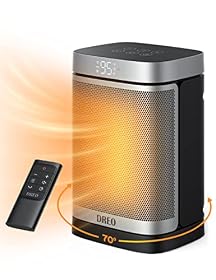
Electric space heaters generally warm the air without removing water from it. Because warmer air has a lower relative humidity at the same moisture level, a heated room can feel drier.
Does a space heater remove moisture from the air?
Usually, no. An electric space heater warms the room but does not take water vapor out of the air. However, as the air gets warmer, its relative humidity falls if the amount of moisture stays the same. That change can make the room feel drier, even though the heater has not removed moisture.
Relative humidity describes how much water vapor is in the air compared with the maximum it could hold at that temperature. Heating increases that capacity, so the same moisture becomes a smaller percentage of it.
Product prices and availability are accurate as of the date/time indicated and are subject to change. Any price and availability information displayed on Amazon.com at the time of purchase will apply to the purchase of this product.
Why does a heated room feel dry?
Winter air often starts with little moisture. When cold outdoor air enters a home and is warmed, its relative humidity drops. A space heater can make this effect more noticeable in the room it heats, especially if outside air is also entering through drafts or ventilation.
Dry-feeling skin, lips, or a scratchy throat can have other causes too, so discomfort alone does not confirm that humidity is low. A small hygrometer can help you check the room rather than guessing.
What kind of heater are you using?
Electric ceramic, fan, or oil-filled heaters: These heat the room without burning fuel and do not normally add or remove water vapor.
Combustion heaters: Fuel-burning heaters may release water vapor as a byproduct, but unvented models can also create carbon monoxide and other indoor-air hazards. Use only a heater approved for the location, follow its instructions, and never use outdoor combustion equipment indoors. Do not rely on added moisture as a reason to use an unsafe heater.
How to make a room feel less dry
Check humidity with a hygrometer. This gives you a better basis for deciding whether the room needs more moisture.
Address drafts and excessive air exchange. Close obvious gaps where appropriate, while maintaining ventilation required for safe operation of appliances.
Use a room humidifier if humidity is genuinely low. Follow its cleaning instructions and monitor humidity so moisture does not build up on windows, walls, or other cold surfaces. Excess humidity can encourage condensation and mold.
Keep the heater’s required clearances and airflow unobstructed. Do not cover a heater or place water containers on it unless the manufacturer specifically allows it.
If a room feels unusually dry despite moderate humidity, consider other causes such as allergies, irritation, or a health issue rather than turning up the humidity indefinitely.
FAQ
Does an electric space heater lower humidity?
It usually does not remove water from the air. It warms the air, which lowers relative humidity when the amount of moisture stays the same.
Can a space heater cause dry skin?
A heated room may feel drier, particularly when the incoming winter air has little moisture. Dry skin can have other causes, so check humidity before assuming the heater is responsible.
Should I put water near a space heater to add humidity?
Do not put water on or near a heater unless its manufacturer explicitly permits it. Use a separate humidifier according to its instructions and monitor room humidity.
Do fuel-burning space heaters add moisture to a room?
Some combustion heaters release water vapor, but unvented fuel-burning heaters can also pose serious indoor-air risks. Follow the heater’s instructions and use only equipment approved for the location.