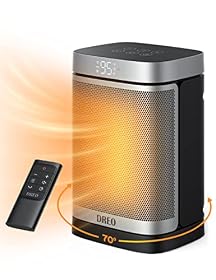
Dual-heating ceramic plus infrared space heaters combine fan-driven room warming with direct radiant heat. Here is what the combination changes, what to check before buying, and when a standard ceramic or infrared heater may be a better fit.
Dual-heating ceramic plus infrared space heaters combine two different heating approaches: ceramic heating with a fan for broader air circulation and infrared heating for more direct warmth. They can be useful when you want quick personal heat plus some room warming, but the combination does not automatically mean a larger heated area or lower operating cost.
How the two heating methods work
Ceramic heating
A ceramic heater warms an internal heating element and usually uses a fan to move air across it. The fan helps distribute heat around the room rather than concentrating warmth directly in front of the unit.
Ceramic heating is generally a good match for:
Bedrooms, offices, and living areas where you want more even air movement
Rooms that need warming after the heater starts
Users who want adjustable fan speeds and thermostat control
The tradeoff is fan noise and air movement. A fan can also stir dust and may feel drafty in a small room.
Infrared heating
Infrared elements provide radiant heat. Instead of relying only on warmed air, they transfer heat directly to people and nearby surfaces within the heater’s effective line of sight.
Infrared heating is generally useful for:
A desk, chair, sofa, or other occupied area
Rooms where you want quiet operation
Cold spots near a window or exterior wall
Radiant heat is more directional. A person outside the heater’s useful coverage area may notice less benefit, even if the room’s air temperature has not changed much.
What “dual heating” means
A dual-heating unit lets you use ceramic, infrared, or a combined setting, depending on the design. The combined mode may provide faster perceived warmth near the heater while also circulating heated air through the room.
Check the manual for the exact operating modes. “Dual heating” does not necessarily mean both elements operate at their maximum output at the same time, and it does not guarantee that the heater uses less electricity than a conventional heater.
When a dual-heating unit makes sense
A combination heater is worth considering when the room has two heating needs:
You want immediate warmth while waiting for the room to heat
You sit in one area but also want some general room warming
You prefer the option of fan-assisted or quieter radiant operation
Different household members prefer different heating modes
You want to switch between directional warmth and broader air circulation
The combination is less compelling if you only need to warm one person at a desk or only want to raise the temperature throughout a small, closed room. In those cases, a straightforward infrared or ceramic heater may be easier to choose and operate.
Product prices and availability are accurate as of the date/time indicated and are subject to change. Any price and availability information displayed on Amazon.com at the time of purchase will apply to the purchase of this product.
What to compare before buying
Total wattage and electrical requirements
Most portable electric space heaters are high-wattage appliances. Compare the heater’s maximum wattage with the circuit and outlet where you plan to use it. Avoid overloading a circuit that already supplies other high-draw appliances.
Plug the heater directly into a properly rated wall outlet unless the manufacturer specifically permits another arrangement. Do not use an extension cord or power strip unless the manufacturer and electrical-safety guidance explicitly allow it. Stop using the heater if the plug, outlet, or cord becomes unusually hot, damaged, loose, or discolored.
A higher wattage can provide more heat output, but it also increases electrical consumption while operating. A dual-heating design does not change that basic relationship.
Room size and layout
Room-size claims vary by manufacturer and depend on insulation, ceiling height, outdoor temperature, drafts, and the desired temperature increase. Treat a coverage number as a rough guide rather than a guarantee.
For the best comparison, consider:
Whether the room is open to other rooms
Window and door drafts
Ceiling height
Insulation quality
Where people sit relative to the heater
Whether the heater has a clear path for airflow or radiant heat
A compact heater may feel effective in a small, enclosed room but struggle in an open-plan area. Neither ceramic nor infrared heat can compensate for substantial air leakage or inadequate whole-home insulation.
Thermostat and control behavior
A thermostat can cycle the heating system on and off after the surrounding air reaches the selected temperature. This is different from maintaining a particular temperature at every part of the room.
Look for controls that are easy to understand, especially if the heater offers separate settings for ceramic, infrared, fan speed, power level, and thermostat operation. A remote control and display may be convenient, but they do not replace basic safety features.
Noise
Ceramic operation usually involves a fan, so it is typically more audible than infrared-only operation. If the heater will run in a bedroom, nursery, or workspace, check whether the product documentation identifies a low-noise or fanless mode. Do not assume that a “quiet” setting is completely silent.
Safety features
Prioritize a heater with a stable base, overheat protection, and a tip-over shutoff. A cool-touch housing can reduce contact burns, but it does not make the heater safe to cover or place near combustible materials.
Keep the heater on a level, hard surface with clear space around it. Keep curtains, bedding, clothing, paper, furniture, and other combustible items away from the heater. Follow the clearance distances in the manual, and do not leave a portable heater operating unattended or while sleeping unless the manufacturer’s instructions and local safety guidance specifically support that use.
Product prices and availability are accurate as of the date/time indicated and are subject to change. Any price and availability information displayed on Amazon.com at the time of purchase will apply to the purchase of this product.
Ceramic plus infrared versus a single heating type
Type
Main strength
Main limitation
Ceramic
Circulates warm air through the room
Fan noise and moving air
Infrared
Direct warmth for people and nearby surfaces
More directional coverage
Dual ceramic plus infrared
Lets you choose or combine heating behaviors
More controls and potentially more complexity
Choose a ceramic-only heater if broad air circulation and simple operation matter most. Choose an infrared-only heater if quiet, directional warmth is the priority. Choose a dual-heating model when you are likely to use both behaviors rather than paying for modes you will rarely select.
Product prices and availability are accurate as of the date/time indicated and are subject to change. Any price and availability information displayed on Amazon.com at the time of purchase will apply to the purchase of this product.
Common misconceptions about combination heaters
They do not necessarily heat a larger room
Combining heating methods can change how warmth is delivered, but the heater’s total output, room conditions, and placement still determine results. A dual-heating label is not a substitute for checking wattage and realistic room requirements.
They are not automatically cheaper to run
Electric resistance heaters convert electricity into heat at the point of use, but operating cost still depends on wattage, run time, thermostat cycling, and local electricity rates. Using a lower setting or heating only an occupied area may reduce consumption; the dual-heating design itself does not guarantee savings.
Infrared heat is not the same as heating the whole room
Infrared warmth can feel immediate on skin and nearby surfaces. That does not necessarily mean the entire room’s air temperature will rise quickly. Consider where you sit and whether you need personal comfort or general room heating.
Placement and use tips
Put the heater on a level, nonflammable surface.
Aim radiant output toward the occupied area without blocking the heater.
Leave the manufacturer’s specified clearance around the unit.
Keep doors and windows closed when practical, while maintaining any ventilation required by the room or appliance.
Clean dust from air intakes and outlets according to the manual.
Do not cover the heater, dry clothing on it, or use it near water unless it is specifically rated for that environment.
Turn it off and unplug it before cleaning or moving it.
Bottom line
Dual-heating ceramic plus infrared units are most useful when you want both room-directed warmth and personal radiant heat. Compare maximum wattage, room layout, thermostat behavior, fan noise, controls, clearance requirements, and safety shutoffs rather than choosing based only on the dual-heating label. If you need one simple function, a well-matched ceramic or infrared heater may provide better value and fewer settings to manage.
FAQ
Do dual ceramic and infrared heaters heat faster?
They may feel faster because infrared heat can provide direct warmth while ceramic heat circulates warm air. Actual room-warming speed depends on total output, room size, insulation, drafts, and operating mode.
Are dual-heating space heaters more energy efficient?
Not automatically. Operating cost mainly depends on wattage, run time, thermostat cycling, and electricity rates. Using radiant heat for a nearby occupant may avoid heating an entire room, but the heater’s combined design does not guarantee lower consumption.
Are ceramic or infrared heaters better for bedrooms?
Either can work when used according to the manufacturer’s instructions. Infrared operation may be quieter if the unit has a fanless mode, while ceramic operation may circulate warmth more broadly. Prioritize tip-over protection, overheat protection, stable placement, and required clearances.
Can I use a dual-heating space heater with an extension cord?
Do not use an extension cord or power strip unless the heater’s manufacturer specifically allows it and the equipment is properly rated. Portable heaters should generally connect directly to a suitable wall outlet, and a qualified electrician should address questionable wiring or overloaded circuits.