Energy-saving mode on a space heater usually reduces its average electricity use by lowering heat output, cycling the heater on and off, or both. It does not make electric resistance heat magically more efficient: savings depend on whether the mode helps the heater run less while keeping the room comfortable.
How They Work · Wed Sep 16
Energy-saving mode on a space heater explained
Energy-saving mode usually manages a space heater’s output or thermostat to avoid heating more than needed. It can lower electricity use, but the savings depend on the room, temperature setting, and how long the heater runs.
What energy-saving mode does
The exact behavior varies by heater. A model may use a thermostat to stop heating when the room reaches a set temperature, then restart as it cools. Another may switch between high and low output or adjust its operation as the target temperature gets closer. Check the manual to see what the mode does on your heater.
When a resistance heater is actively producing heat, it may still draw its full selected power. The savings generally come from reducing the time it runs at that level, or from using a lower output—not from producing the same amount of heat with dramatically less electricity.
Space heater with energy-saving thermostat controls
 DREO Space Heater, Portable Electric Heaters for Indoor Use with ThermostatDREO
$35.14 as of
View on Amazon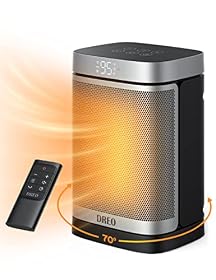 DREO Space Heater, Portable Electric Heaters for Indoor Use with ThermostatDREO
$49.99 as of
View on Amazon Space Heater, WINHL Portable Electric Heaters for Indoor Use,70°OscillationWINHL
$29.96 as of
View on Amazon
Product prices and availability are accurate as of the date/time indicated and are subject to change. Any price and availability information displayed on Amazon.com at the time of purchase will apply to the purchase of this product.
When it can save energy
Energy-saving mode is most useful when it prevents the heater from running continuously after the room is warm. It may also help if it encourages you to choose a lower temperature or heat only the room you are using.
If the mode maintains the same temperature for the same amount of time as another setting, the difference in energy use may be small. A cold, drafty room can make the heater run often, while a heater placed near a draft or in a poor location may misread the room and cycle in a way that feels uncomfortable.
To estimate electricity use, multiply the heater’s power in kilowatts by the number of hours it runs. For example, a 1.5-kilowatt heater running for four hours would use 6 kilowatt-hours. Actual use may be lower if a thermostat cycles the heater off; your electric rate determines the cost.
Oil-filled radiator with adjustable thermostat
 Dumos Oil Filled Radiator Heater with Adjustable Thermostat, NoiselessDUMOS
$59.99 as of
View on Amazon Amazon Basics Portable Oil Space Heater with 7 Oil-Filled Fins, 3 Heat Settings, Adjustable Thermostat,…Amazon Basics
$70.19 as of
View on Amazon De'Longhi Oil filled Radiator Heater, 1500W Electric Space Heater for indoor use, portable room heater,…De'Longhi
$129.95 as of
View on Amazon
Product prices and availability are accurate as of the date/time indicated and are subject to change. Any price and availability information displayed on Amazon.com at the time of purchase will apply to the purchase of this product.
How to use the mode effectively
- Set a comfortable temperature rather than turning the thermostat higher than needed. A higher setting does not necessarily warm the room faster.
- Close doors and windows, and reduce drafts where practical so the heater is not constantly replacing lost heat.
- Place the heater where its thermostat can sense the room normally. Keep it away from cold windows, doorways, and objects that could block airflow, following the manufacturer’s placement instructions.
- Give the heater time to reach the target temperature. Frequent changes to the setting can make it harder to judge whether the mode is helping.
- Compare the heater’s behavior in energy-saving mode with its normal setting under similar conditions. Notice how often it runs and whether the room remains comfortable.
What energy-saving mode does not mean
The label is not a guarantee of a particular percentage of savings. It also does not mean the heater can safely use less clearance, run from an unsuitable outlet, or be left unattended. Follow the manual’s instructions, place the heater on a stable surface, keep it clear of combustible materials, and plug it directly into a wall outlet unless the manufacturer says otherwise. Stop using it if the plug, cord, or outlet becomes unusually hot or shows damage.
If you need a heater to maintain a steady temperature, choose one with clear thermostat controls and a mode you understand. If you mainly want quick warmth for short periods, a simple low setting may be just as useful as a feature labeled energy-saving.
FAQ
Does energy-saving mode use less electricity on a space heater?
It can, if it reduces the heater’s average runtime or output. The amount saved depends on the mode, thermostat setting, room conditions, and how long the heater is used.
Does eco mode make a space heater heat more efficiently?
Usually, it manages output or cycles the heater to reduce unnecessary runtime. It does not typically change how efficiently an electric resistance heater turns electricity into heat.
Should I use low heat or energy-saving mode?
Use whichever setting maintains a comfortable temperature without unnecessary runtime. Low heat limits output; energy-saving mode may also use thermostat-controlled cycling. Their behavior varies by model.
Can I leave a space heater in energy-saving mode unattended?
Do not assume the mode makes unattended use safe. Follow the heater’s manual and applicable safety guidance, and keep the heater away from combustible materials.