A GFCI outlet does not automatically make a standard space heater safe for bathroom use. Choose only a heater specifically listed for bathroom or damp-location use, follow its clearance instructions, and keep it well away from water.
A GFCI outlet reduces shock risk, but it does not make every space heater safe to use in a bathroom. For bathroom heating, choose a unit specifically approved by its manufacturer for bathroom or damp-location use. Keep it outside the tub and shower area, away from splashing water, and follow the installation and clearance instructions exactly. If the heater is not clearly rated for bathroom use, do not use it there—even with GFCI protection.
What a GFCI does—and does not do
A ground-fault circuit interrupter, or GFCI, quickly cuts power when it detects current leaking from the intended electrical path. This helps reduce the risk of severe electric shock in locations where water may be present.
A GFCI does not:
Make a non-bathroom-rated heater safe in a wet location
Protect against every fire or overheating hazard
Make a heater safe to place beside a sink, tub, or shower
Correct an overloaded circuit, damaged cord, or loose outlet
Replace the heater manufacturer's required clearances
Test the GFCI using its Test and Reset buttons before relying on it. If it does not trip and reset normally, stop using that outlet and have it checked by a qualified professional.
What type of heater is appropriate?
Bathroom-rated wall-mounted heaters
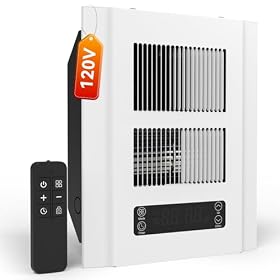
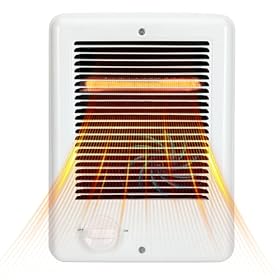
A permanently mounted heater specifically designed and listed for bathroom use is usually a better fit than a portable floor heater. Wall mounting keeps the unit away from puddles and reduces the chance that it will be knocked over.
Check the product documentation for all of the following:
Explicit bathroom or damp-location approval
Required distance from tubs, showers, sinks, and other water sources
Whether it must be hardwired or may use a plug
Required mounting height and orientation
Built-in overheat protection and a thermal cutoff
Whether a qualified electrician must install it
Do not assume that a heater is bathroom-safe merely because it is wall-mounted, compact, splash-resistant, or advertised for quick warmups.
Portable ceramic or fan heaters
Most ordinary portable ceramic and fan heaters are intended for dry indoor locations. Their manuals commonly prohibit use in bathrooms or other areas exposed to water or high humidity. A GFCI does not override that restriction.
If a portable unit is explicitly approved for bathroom use, place it on a stable, dry surface well outside the tub and shower area. Never place it on a counter, sink ledge, toilet tank, or any surface where it could fall into water.
Oil-filled radiators
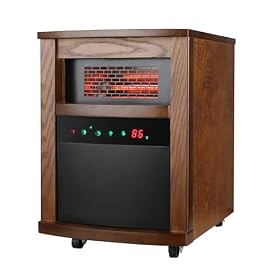
Oil-filled radiators are generally designed for dry rooms and are usually a poor choice for bathrooms unless the specific model is approved for that location. They are bulky, take time to warm up, and can remain hot after being switched off. Do not use one near water simply because it has no exposed heating coil.
Product prices and availability are accurate as of the date/time indicated and are subject to change. Any price and availability information displayed on Amazon.com at the time of purchase will apply to the purchase of this product.
Key buying checks
Look for clear location approval
The manual and product labeling should clearly state whether the heater is suitable for bathroom or damp-location use. If the documentation only says “indoor use,” that is not enough. If the instructions say “do not use in bathrooms,” follow that warning.
Confirm the electrical requirements
Many plug-in heaters draw close to the practical limit of a standard 15-amp household circuit. A typical 1,500-watt heater draws about 12.5 amps at 120 volts, leaving limited capacity for other appliances on the same circuit.
Before buying, check:
The heater's wattage and voltage
The circuit rating
What else shares the circuit
Whether the outlet is GFCI protected
Whether the manufacturer requires a dedicated circuit or hardwired installation
Do not use an extension cord, power strip, or plug adapter with a space heater unless the manufacturer specifically permits it. In most cases, the safest approach is to plug the heater directly into the required outlet.
Check clearance requirements
Clearance is more important than the heater's small size. Keep the unit away from towels, shower curtains, bath mats, clothing, paper, toiletries, and other combustible materials. Never drape anything over it or block its air intake or outlet.
Use the larger of the manufacturer's stated clearance or local electrical requirements. If you cannot maintain the required distance from water and combustible materials, do not use that heater in the bathroom.
Prefer built-in safety controls
Useful safety features can include:
Overheat shutoff
Thermal fuse or thermal cutoff
Tip-over shutoff on portable units
A grounded plug where required
A timer or automatic shutoff
A thermostat that limits unnecessary continuous operation
These features reduce some risks, but none permits use contrary to the manual or local code.
Product prices and availability are accurate as of the date/time indicated and are subject to change. Any price and availability information displayed on Amazon.com at the time of purchase will apply to the purchase of this product.
Safer installation and use
For a bathroom heater that is hardwired or permanently mounted, use a qualified electrician unless you are authorized and equipped to perform the work under applicable codes. The electrician can verify grounding, GFCI protection, circuit capacity, mounting location, and required clearances.
For any approved plug-in unit:
Inspect the cord, plug, housing, and outlet before each use.
Confirm the GFCI trips and resets correctly.
Keep the heater outside the tub and shower area and away from splashes.
Place a portable heater on a level, dry, uncovered surface.
Plug it directly into the wall outlet.
Keep towels, clothing, and other combustibles clear.
Turn it off and unplug it when leaving the room or going to sleep.
Stop using it if the plug, outlet, or cord becomes hot, discolored, loose, or damaged.
Do not operate a portable heater while bathing or showering. Steam and condensation can also create conditions that are unsuitable for a heater not approved for damp locations.
Product prices and availability are accurate as of the date/time indicated and are subject to change. Any price and availability information displayed on Amazon.com at the time of purchase will apply to the purchase of this product.
When another heating solution is better
If the bathroom has no suitable location that meets the heater's water-clearance requirements, a portable space heater is not the right solution. Consider a permanently installed bathroom heating system, such as an approved wall-mounted heater or an exhaust fan with an integrated heat function, installed according to the manufacturer's instructions and local code.
If you only need brief warmth before using the room, a properly installed bathroom heater with a timer or thermostat may be more practical than carrying a portable heater in and out. Never leave a standard bedroom or living-room space heater in the bathroom for convenience.
Stop using the heater if these problems occur
Unplug the heater and do not use it again until the cause is resolved if:
The GFCI trips repeatedly
The outlet or plug feels hot
The heater smells like burning plastic or wiring
The cord is frayed, crushed, or discolored
The fan slows, makes unusual sounds, or stops unexpectedly
The unit has been splashed, submerged, or exposed to significant moisture
The tip-over or overheat protection activates repeatedly
Do not bypass a GFCI, remove the grounding pin, open the heater, or replace a fuse with a higher-rated fuse. For repeated trips or suspected wiring problems, have the circuit inspected by a qualified electrician. If the heater has been damaged by water or develops an internal fault, replacing the unit is generally safer than attempting an improvised repair.
FAQ
Can I use any space heater in a bathroom if the outlet has GFCI protection?
No. GFCI protection helps reduce shock risk but does not make a standard space heater suitable for bathroom use. Use only a heater specifically approved for bathroom or damp-location use, and follow its required clearances.
How far should a space heater be from a shower or bathtub?
Use the distance specified by the heater manufacturer and applicable local code. Keep the unit completely outside the tub and shower area and away from splashing water. If the required clearance cannot be maintained, do not use the heater there.
Are ceramic heaters safe for bathrooms?
Only if the specific ceramic heater is explicitly approved for bathroom or damp-location use. Ceramic heating technology alone does not provide bathroom safety.
Can I plug a bathroom space heater into an extension cord?
Generally, no. Plug the heater directly into the required wall outlet unless the manufacturer explicitly permits another arrangement. Extension cords and power strips can overheat under the high load of a space heater.
Why does my space heater keep tripping the GFCI?
Possible causes include moisture, a damaged cord or plug, an internal heater fault, a defective GFCI, or a circuit problem. Unplug the heater, do not bypass the GFCI, and have the outlet or heater checked if the problem continues.