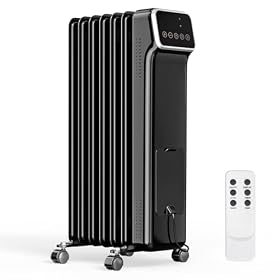
Best Space Heater for a Nursery With Extra Safety Switches
The best nursery space heater is not simply the hottest or most feature-packed model. Look for independently verified safety protections, stable placement, precise temperature control, and controls that children cannot easily change.
A nursery space heater should be treated as supplemental heat—not as a device that can safely run unattended near a child. The best choice has a stable, tip-resistant design, automatic overheat protection, a reliable thermostat, and controls that can be locked or kept out of reach. Place it well away from the crib, bedding, curtains, furniture, and other combustible materials, and follow the heater’s instructions and local fire-safety guidance.
What makes a space heater appropriate for a nursery?
No portable heater is completely risk-free in a child’s room. A safer nursery setup combines the right heater features with careful placement and supervision.
Prioritize these features:
Tip-over shutoff: The heater should turn off automatically if it is knocked over or lifted from its normal position.
Overheat protection: A thermal cutoff or overheat shutoff helps stop the unit if internal temperatures become excessive.
Thermostatic control: A thermostat is preferable to a heater that runs continuously at one fixed output. It can reduce overheating and unnecessary cycling.
Child lock or control lockout: This helps prevent a child from changing the temperature, starting the heater, or switching operating modes.
Cool-touch or lower-temperature housing: This can reduce burn risk, although no heater should be considered safe to touch while operating.
Enclosed heating element: Avoid exposed glowing elements in a nursery, particularly where bedding, clothing, or toys could come into contact with the heater.
Timer or automatic shutoff: Useful as a backup, but not a substitute for turning the heater off when the room is occupied or before leaving.
Safety certification: Look for a recognized independent testing mark on the product or packaging, and verify that the heater is approved for the intended electrical supply.
A remote control is not a safety feature by itself. It may make operation convenient, but it can also be misplaced or used by a child unless the unit has a separate control lock.
The most important safety switches
“Extra safety switches” can mean several different protections. They do not all perform the same job.
Tip-over switch
A tip-over switch detects when the heater is no longer upright and cuts power. It is especially important in a nursery because a heater can be bumped by a child, pet, toy, or furniture.
The switch should reset only when the heater is returned to its intended position, according to the manufacturer’s instructions. Do not defeat, tape down, or bypass it.
Overheat cutoff
An overheat cutoff responds to excessive internal temperature. Restricted airflow, dust, a blocked intake, or a failing component can cause temperatures to rise. The cutoff is a backup—not permission to cover the heater or operate it in a cramped space.
Child lock
A child lock generally prevents changes to the control panel. Check what it actually locks: some designs disable only button presses, while others may still allow the unit to be started with a remote control or power interruption.
If the heater does not have a control lock, keep its controls physically inaccessible rather than relying on a complicated operating routine.
Thermostat and temperature control
A thermostat can maintain a set room temperature more evenly than a heater with only low, medium, and high settings. Choose a model with clear temperature controls and a display or setting that is easy for an adult to understand.
Avoid trying to heat the nursery quickly by using the highest setting and placing the heater close to the crib. Faster heating does not make that arrangement safer.
Nursery space heaters with child lock and safety shutoff
Product prices and availability are accurate as of the date/time indicated and are subject to change. Any price and availability information displayed on Amazon.com at the time of purchase will apply to the purchase of this product.
Heater types to consider
Ceramic heaters
Ceramic heaters commonly provide quick, directional warmth and may include thermostats, timers, tip-over switches, and overheat protection. Their fan can circulate warm air effectively, but the airflow may be noisy or may stir dust. Keep the intake and outlet clear.
Oil-filled radiators
Oil-filled radiators warm more gradually and usually have no exposed heating element. Their surfaces can still become hot, and their size and weight can make placement more difficult in a small nursery. They also need clear space around the entire unit and should not be covered.
Fan-forced heaters
Fan-forced heaters can distribute heat quickly, but moving air may create noise and can make the room feel dry. If the heater has a fan, keep bedding, curtains, dust, and toys away from both the intake and outlet.
The heater type matters less than the safety controls, condition of the unit, correct sizing, and placement. A smaller heater with dependable protection is generally preferable to an oversized unit operated near a crib.
Compact ceramic heaters with nursery safety features
Product prices and availability are accurate as of the date/time indicated and are subject to change. Any price and availability information displayed on Amazon.com at the time of purchase will apply to the purchase of this product.
How much power does a nursery heater need?
Most portable electric space heaters are designed around the capacity of a standard household circuit, but the correct wattage depends on the room, insulation, outdoor temperature, and the heater’s instructions. More wattage is not automatically better for a nursery.
Check the heater’s electrical rating and the circuit’s capacity. Plug the heater directly into a wall outlet unless the manufacturer specifically permits another arrangement. Do not use an extension cord, power strip, or plug adapter with a portable heater unless the manufacturer and a qualified electrician explicitly indicate that it is acceptable. Never overload a circuit shared with other high-power appliances.
If a nursery needs continuous or substantial heating, have the home’s heating system assessed rather than depending on a portable heater as the primary source of warmth.
Oil-filled radiators for quieter supplemental room heat
Product prices and availability are accurate as of the date/time indicated and are subject to change. Any price and availability information displayed on Amazon.com at the time of purchase will apply to the purchase of this product.
Safe nursery placement
Placement is at least as important as the heater’s feature list.
Keep the heater on a level, solid, nonflammable surface where it cannot be easily knocked over.
Maintain at least the clearance specified in the manual. If the instructions do not provide a clearance, use a generous open area around the heater rather than placing it close to furniture or fabrics.
Keep it well away from the crib, bassinet, bedding, blankets, curtains, clothing, toys, and storage bins.
Do not place it under a crib, table, changing table, or other furniture.
Keep the cord out of walking paths and away from the crib. Do not run it under rugs or cover it with bedding.
Make sure a smoke alarm is working on every level and outside sleeping areas, as recommended by fire-safety authorities.
Turn the heater off when leaving the room and before sleeping unless the manufacturer and local safety guidance specifically support the operating arrangement.
Do not use a portable heater to warm a crib, bassinet, sleeping surface, or enclosed tent. A baby’s temperature should be managed with appropriate clothing and room conditions rather than direct hot airflow.
What to check before buying
Use this checklist when comparing nursery-appropriate models:
Confirm the safety functions in the manual. Do not assume a product has tip-over or overheat protection because it has a digital display or a premium price.
Check whether the safety shutoffs are automatic. A warning light or alarm is not the same as automatic power interruption.
Look for a genuine child lock. Determine whether it locks the buttons, remote, timer, and restart behavior.
Consider noise. Fan heaters may be audible during sleep, while some silent designs heat more slowly.
Check size and stability. A compact unit is not necessarily safer if it has a narrow base or can be easily pulled down.
Review cleaning requirements. Dust buildup can restrict airflow and trigger overheat protection.
Verify the electrical requirements. Use only the voltage, outlet type, and circuit arrangement specified by the manufacturer.
Check recalls and product documentation. Keep the manual and follow any registration or recall instructions.
When not to use the heater
Stop using the unit if it smells like burning plastic, makes unusual electrical sounds, repeatedly shuts off, shows damaged wiring, has a loose plug, becomes unusually hot, or has been dropped. Do not open or repair a portable heater yourself unless you are qualified and the manufacturer specifically authorizes the repair.
If the outlet, plug, or cord becomes hot, unplug the heater if it is safe to do so and stop using that outlet until it has been evaluated. Repeated tripped breakers, scorched outlets, flickering, or other electrical problems require a qualified electrician.
A heater that repeatedly trips its overheat protection may have blocked airflow, accumulated dust, an incorrect setup, or an internal fault. After the unit is unplugged and fully cool, check only the user-serviceable areas described in the manual. If the problem continues, replace the heater or have it serviced through an approved provider.
Bottom line
Choose a nursery space heater with automatic tip-over and overheat shutoffs, a thermostat, and a true control lock when available. The heater should remain far from the crib and all fabrics, sit directly on a stable surface, and be plugged into a suitable wall outlet. If you cannot maintain safe clearance or supervision, do not use a portable heater in the nursery; improve the home’s primary heating instead.
FAQ
Is it safe to leave a space heater on in a nursery overnight?
The safest general practice is to turn a portable heater off before leaving the room or going to sleep. Follow the manufacturer’s instructions and local fire-safety guidance, and never rely on a timer, tip-over switch, or overheat cutoff as a substitute for supervision.
What safety switch is most important on a nursery space heater?
Tip-over shutoff and overheat protection address different hazards, so both are important. A control lock is also valuable because it can prevent a child from changing the heater’s settings or turning it on.
Can I put a space heater near a crib to warm the baby?
No. Keep a portable heater well away from the crib, bedding, curtains, clothing, and other combustible materials. Do not direct hot air at a baby or use a heater to warm a crib or bassinet.
Are oil-filled heaters safer than ceramic heaters for a nursery?
Neither type is automatically safe. Compare the specific unit’s tip-over protection, overheat cutoff, thermostat, surface temperature, stability, certification, and required clearances. Oil-filled models may have no exposed heating element, but their surfaces can still become hot.
Can I use an extension cord with a nursery space heater?
Do not use an extension cord, power strip, or plug adapter unless the manufacturer and a qualified electrician specifically approve the arrangement. Portable heaters should generally be plugged directly into an appropriate wall outlet.