Best Space Heater for a Small Office: What to Look For
The best space heater for a small office is usually a compact heater with adjustable wattage, a thermostat, tip-over protection, and overheat protection. Here is how to choose the right size and type without overheating the room or overloading the circuit.
Best space heater for a small office
For most small offices, the best space heater is a compact ceramic or fan-forced heater with adjustable heat settings, a thermostat, tip-over protection, and overheat protection. A 1,500-watt setting can provide strong heat, but a lower setting is often more practical for an occupied office because it uses less electricity and may reduce temperature swings.
The right choice depends on more than wattage. Desk placement, noise, thermostat behavior, room insulation, and the electrical circuit all affect how well a heater works.
What size space heater does a small office need?
A small office does not automatically need the highest-wattage heater. Heat loss depends on ceiling height, windows, exterior walls, drafts, insulation, and the temperature you want to maintain.
As a general guide:
Lower-wattage heaters: Useful for taking the chill off a well-insulated office or warming the area near a desk.
Around 1,500 watts: Common for heating a small room more quickly, especially when the room is drafty or poorly insulated.
Adjustable wattage: More useful than a single maximum-wattage setting because it lets you reduce heat output after the room warms up.
A typical 1,500-watt heater on a 120-volt household circuit draws about 12.5 amps. That leaves limited capacity on a circuit shared with computers, monitors, printers, coffee makers, or other high-draw appliances. Plug the heater directly into a properly rated wall outlet, not a power strip or extension cord, unless the manufacturer specifically permits otherwise.
If the office shares a circuit with several appliances or a breaker trips, stop using the heater on that circuit and have the electrical setup evaluated by a qualified professional.
Which heater type is best for an office?
Ceramic fan heaters: Best for quick, directed warmth
Ceramic heaters are often the most practical choice for a small office. A fan moves air across a heated ceramic element and distributes warmth relatively quickly. Many compact models include adjustable heat settings, a thermostat, and fan-only operation.
They work well when you want heat near a desk or need the room to warm up quickly. The tradeoff is fan noise, which can be distracting during calls or focused work. Look for a unit with a published noise specification if quiet operation matters; otherwise, noise descriptions can be subjective.
Oil-filled radiators: Best for quiet, steady heat
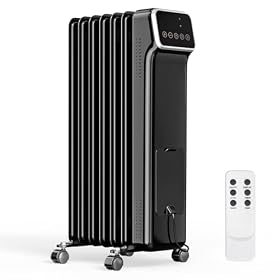
Oil-filled radiators heat gradually and continue radiating warmth after the heating element cycles off. They do not usually use a fan, so they can be a better fit for video meetings, recording, or quiet work.
Their disadvantages are slower warm-up, a larger footprint, and a hot exterior surface. They need clearance from furniture, curtains, paper, and other combustible materials. Their controls may also be less convenient for quickly warming a specific desk area.
Infrared heaters: Best for targeted warmth
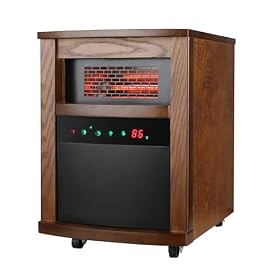
Infrared heaters warm people and nearby surfaces more directly rather than relying entirely on room air circulation. They can be useful when you spend most of the day in one location, but their effectiveness depends heavily on line of sight and placement.
They are not automatically more energy-efficient for heating an entire office. Compare the heater's wattage and control options rather than relying on the heater type alone.
Product prices and availability are accurate as of the date/time indicated and are subject to change. Any price and availability information displayed on Amazon.com at the time of purchase will apply to the purchase of this product.
Features that matter most in a small office
Adjustable heat settings
At least two heat settings let you use less power once the room is comfortable. A lower setting can also reduce cycling and make the heater less noticeable during work.
A real thermostat
A thermostat should turn the heating element off when the room reaches the selected temperature and turn it back on as the temperature falls. This is generally more useful than a simple timer because it responds to changing room conditions.
Do not assume a numbered dial corresponds to an exact room temperature. Many compact heaters use approximate control settings.
Tip-over and overheat protection
Tip-over protection should shut the heater off if it is knocked over. Overheat protection is an additional safeguard if airflow is restricted or the unit becomes excessively hot. These features reduce risk but do not make unattended operation safe.
Compact footprint and stable base
Measure the available floor or desktop area before buying. A heater should sit on a stable, level, nonflammable surface and should not be wedged under a desk where airflow is restricted.
Timer and automatic shutoff
A timer can be convenient, but it should not be treated as a substitute for supervision. For an office, an automatic shutoff at the end of the workday may help prevent accidental overnight operation.
Controls and display
Easy-to-read controls are useful when the heater sits below a desk or across the room. A bright display may be distracting in a dark office, while a display that cannot be dimmed may be inconvenient during presentations or video calls.
Product prices and availability are accurate as of the date/time indicated and are subject to change. Any price and availability information displayed on Amazon.com at the time of purchase will apply to the purchase of this product.
Safe placement in an office
Place the heater on the floor unless the manufacturer specifically approves another location. Keep it away from curtains, paper, furniture, clothing, rugs that could block the intake, and foot traffic. Do not cover it or place it inside a cabinet, under a desk with restricted clearance, or directly beside a chair where clothing could contact it.
Keep the heater at least as far from combustible materials as the manufacturer specifies. If those instructions are unavailable, use generous clearance on all sides and above the unit.
Inspect the cord and plug before each heating season. Do not use a heater with a damaged cord, loose plug, scorch marks, unusual odor, repeated breaker trips, or signs of overheating. A warm plug or outlet is a reason to stop using the heater and have the outlet checked.
Product prices and availability are accurate as of the date/time indicated and are subject to change. Any price and availability information displayed on Amazon.com at the time of purchase will apply to the purchase of this product.
How to choose between the main options
Choose a compact ceramic heater if you want fast warm-up, directed airflow, and a small footprint.
Choose an oil-filled radiator if quiet operation and steady room heat matter more than fast warm-up or compact size.
Choose a targeted infrared heater if you mainly want warmth at one workstation and can maintain safe clearance around the unit.
For any type, prioritize adjustable wattage, thermostat control, tip-over protection, overheat protection, a stable base, and clear manufacturer instructions over decorative features.
When a space heater is not the right solution
A space heater may not solve a persistent cold-office problem caused by a failed central heating system, major drafts, inadequate insulation, or an electrical circuit that cannot safely support the load. In those cases, address the building or electrical issue rather than running a portable heater continuously.
If the heater smells unusual briefly during initial use, follow the manufacturer's instructions and ventilate the room if directed. Persistent burning odor, smoke, crackling, damaged wiring, or abnormal cycling means the unit should be unplugged and replaced or professionally evaluated. Do not open or repair a portable heater unless you are qualified and the manufacturer authorizes the procedure.
FAQ
Is a 1,500-watt heater too much for a small office?
Not necessarily, but it may draw about 12.5 amps on a 120-volt circuit. Check what else shares the circuit, use the heater directly in a wall outlet, and select a lower setting when practical. Stop using it if the breaker trips or the plug or outlet becomes hot.
Are ceramic heaters or oil-filled radiators better for an office?
Ceramic heaters warm a space faster and are easier to direct toward a desk, but their fans can make noise. Oil-filled radiators are generally quieter and provide steadier heat, but they warm more slowly and require more floor space.
Can I put a space heater under my desk?
Only if the heater's instructions permit that placement and there is adequate clearance around the intake, outlet, cord, and surrounding materials. A cramped area can restrict airflow and increase fire risk. Do not place a heater where feet, clothing, paper, or furniture can contact it.
Should I leave a space heater on while I am away from the office?
No. Portable heaters should generally be turned off and unplugged when the room is unattended, unless the manufacturer and applicable safety guidance specifically state otherwise. A timer or thermostat does not eliminate the risk of unattended operation.