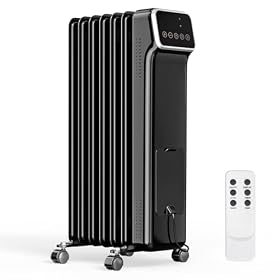
An oil-filled heater can provide quiet, steady warmth overnight, but safe use depends on the heater’s controls, placement, electrical connection, and the manufacturer’s instructions.
An oil-filled heater can be a practical choice for overnight warmth because it operates quietly and continues radiating heat after its heating element cycles off. However, no portable space heater should be treated as risk-free while unattended. Choose a current model with a thermostat, overheat protection, and tip-over shutoff, then follow the manufacturer’s instructions for bedroom use, clearance, and overnight operation.
Is an oil-filled heater suitable for overnight use?
Compared with many fan-forced heaters, oil-filled radiators are quiet and produce steady heat rather than constantly blowing air. That makes them comfortable for a bedroom or other room where noise matters.
The oil inside the sealed radiator does not normally need to be replaced, and the heater does not burn fuel or consume oxygen like a combustion heater. It still contains hot electrical components and can ignite nearby materials if placed incorrectly, covered, damaged, or connected unsafely.
Before leaving one on while sleeping, confirm that the owner’s manual permits the intended use. Some manufacturers specifically warn against unattended or overnight operation, and those instructions take priority.
Features that matter for overnight heating
Adjustable thermostat
A thermostat lets the heater cycle on and off instead of heating continuously. This can improve comfort and reduce unnecessary runtime. Look for a clearly adjustable temperature control rather than only a high/low power switch.
Overheat protection
This safety feature is intended to shut the heater down if internal temperatures become excessive. It is an important safeguard, but it does not replace proper placement or supervision.
Tip-over shutoff
A tip-over switch can turn the heater off if it falls over. Choose a stable unit with a broad base, and do not rely on the switch to make unsafe placement acceptable.
Multiple heat settings
Lower settings can help maintain a comfortable temperature without running the heater at maximum output continuously. The exact heat output depends on the model and setting, so check the product specifications rather than assuming every oil-filled heater performs identically.
A visible power and temperature control
Controls should be easy to operate without reaching across the hot radiator. A timer may be useful for warming the room before bedtime or switching the heater off later, but a timer is not a substitute for the required safety clearances.
Product prices and availability are accurate as of the date/time indicated and are subject to change. Any price and availability information displayed on Amazon.com at the time of purchase will apply to the purchase of this product.
How much wattage do you need?
Most portable electric heaters are limited by a standard household circuit, but the heater’s rated wattage still affects operating cost and how quickly it can warm a room. Higher wattage generally supplies more heat, while lower settings use less electricity but may not maintain the desired temperature in a cold or poorly insulated room.
A rough planning rule is that an electric heater supplies heat according to its wattage, not the type of outer housing. Room height, insulation, drafts, outdoor temperature, windows, and the number of exterior walls can all change the result. Use the manufacturer’s stated room-size guidance as a starting point, not a guarantee.
Do not use an extension cord, power strip, or plug adapter unless the manufacturer explicitly permits it and the device is appropriately rated. Plug the heater directly into a properly grounded wall outlet. Avoid sharing that outlet with another high-wattage appliance.
Product prices and availability are accurate as of the date/time indicated and are subject to change. Any price and availability information displayed on Amazon.com at the time of purchase will apply to the purchase of this product.
Safe placement beside a bed
Place the heater on a level, solid, nonflammable floor where it cannot be knocked over. Keep the front, sides, top, and rear clear of bedding, curtains, clothing, furniture, paper, and other combustible materials. Use the clearance distances specified in the manual; if those distances are not available, do not guess.
Keep blankets, comforters, clothing, and pets away from the heater. Never cover an oil-filled radiator, use it as a drying rack, or place it where bedding could fall onto it during the night. Do not put it on a bed, chair, table, or other elevated surface unless the manufacturer specifically designed and approved it for that location.
The cord should lie where it cannot be pinched, walked on, pulled, or covered by a rug. Stop using the heater if the plug, cord, outlet, or housing becomes damaged or unusually hot.
Product prices and availability are accurate as of the date/time indicated and are subject to change. Any price and availability information displayed on Amazon.com at the time of purchase will apply to the purchase of this product.
A safer overnight setup
Read the manual and confirm that the heater is approved for the intended room and use.
Inspect the cord, plug, housing, wheels, and controls before use.
Position the heater on a stable floor with the specified clearance on every side.
Plug it directly into a wall outlet without an extension cord or power strip.
Set the thermostat to the lowest comfortable temperature and use a lower heat setting if practical.
Make sure curtains, bedding, clothing, and other objects cannot contact the unit.
Keep the heater away from water and do not use it in a bathroom unless the manufacturer specifically permits that use.
Turn it off and unplug it when it is not needed, when leaving the home, or whenever the manual requires.
A smoke alarm should be installed and maintained in or near sleeping areas according to local safety guidance. People who may not wake easily, young children, and anyone unable to respond quickly to an alarm require extra caution; a portable heater may not be appropriate for unattended overnight use in those circumstances.
Oil-filled heater versus ceramic heater overnight
An oil-filled radiator is usually the quieter option and provides gradual, steady heat. It may take longer to warm a room because the radiator and oil need to heat up.
A ceramic fan heater can warm the nearby air more quickly and is often smaller, but its fan creates noise and may move dust. Both types can become hot and require appropriate clearance, tip-over protection, overheat protection, and direct connection to a suitable outlet. The heating technology alone does not determine whether a specific model is safe to leave operating overnight.
When to stop using the heater
Turn the heater off and unplug it if you notice a burning smell, smoke, sparking, repeated shutdowns, melted plastic, a damaged cord, a loose plug, unusual noise, or an outlet that is hot or discolored. Do not open the heater or attempt electrical repairs yourself.
If the heater repeatedly trips a circuit breaker, move other loads off the circuit and check the manual. Do not repeatedly reset the breaker or use a higher-rated fuse or breaker. Persistent electrical problems should be assessed by a qualified electrician.
If a radiator is leaking oil, stop using it and replace it or contact the manufacturer. A sealed oil-filled heater is not a user-refillable appliance.
When replacement makes more sense
Replace the heater when its safety shutoffs do not work, the cord or plug is damaged, the casing is cracked, the unit has been dropped, or it shows signs of overheating. Replacement is also sensible when the heater lacks basic protections such as tip-over and overheat shutoff and you need a model for a sleeping area.
For overnight use, prioritize documented safety features, stable construction, a thermostat, and clear manufacturer guidance over decorative features or maximum heat output. When in doubt about whether a particular unit can operate unattended, turn it off and follow the manufacturer’s recommendation.
FAQ
Can you leave an oil-filled heater on all night?
Only if the manufacturer’s instructions permit unattended or overnight operation and the heater is correctly placed and connected. Use its thermostat and safety features, keep all combustibles clear, and turn it off if the manual advises against overnight use.
Do oil-filled heaters use a lot of electricity?
Their electricity use depends mainly on the heater’s wattage and how long its heating element runs. A thermostat can cycle the heater off after reaching the set temperature, but insulation, drafts, room size, and outdoor temperature also affect consumption.
Are oil-filled heaters safer than ceramic heaters?
Neither type is automatically safe to leave unattended. Oil-filled models are generally quiet and provide steady heat, while ceramic fan heaters often warm air faster. Both require tip-over and overheat protection, proper clearance, and a direct connection to a suitable wall outlet.
Can an oil-filled heater be used in a bedroom?
It may be suitable when the manufacturer allows bedroom use and the heater is placed on a stable floor with required clearances. Keep it away from bedding, curtains, clothing, children, and pets, and never cover it.