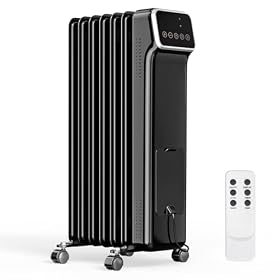
Space heater for a sunroom that gets cold at night
A sunroom loses heat quickly through windows, so the best heater depends on its size, insulation, and whether you need quick warmth or steady overnight comfort. Use wattage, thermostat control, placement, and safety features to narrow the choice.
A sunroom that gets cold at night usually needs supplemental heat rather than a small decorative heater. Large windows, exterior doors, tile floors, and limited insulation let heat escape quickly. For most enclosed sunrooms, start by matching the heater’s wattage to the room and electrical circuit, then choose between a fast-heating ceramic heater and a quieter oil-filled radiator for steadier warmth.
What to look for in a sunroom heater
Match the heater to the room
Portable electric heaters are commonly rated by watts. Many household models provide up to 1,500 watts, which is about 5,118 BTU per hour. That may be suitable for a small, reasonably insulated sunroom, but it may struggle to maintain comfortable temperatures in a large room with single-pane windows or noticeable drafts.
Before buying, consider:
Room size: A larger room requires more heating capacity or more effective heat distribution.
Window area: A wall of glass increases heat loss, especially at night.
Insulation and drafts: Weatherstripping, curtains, and cellular shades can make the same heater feel much more effective.
Ceiling height: A high ceiling increases the volume of air the heater must warm.
Electrical capacity: A 1,500-watt heater on a 120-volt circuit draws about 12.5 amps. Avoid overloading a circuit shared with other high-power appliances.
If the sunroom is very large, poorly insulated, or separated from the home by a frequently opened door, a portable heater may only provide localized comfort. Improving drafts and considering professionally installed heating may be more effective than buying a larger portable unit.
Choose ceramic for quick, directed warmth
Ceramic heaters typically use a fan to move heated air into the room. They are useful when you want to warm a seating area quickly after entering the sunroom. Look for adjustable heat levels, a thermostat, and an oscillation option if you want to distribute warmth beyond one chair.
The tradeoffs are fan noise and moving air. A ceramic heater can also feel less comfortable if it blows directly at your legs or face. Keep the airflow unobstructed and do not cover the heater.
Choose an oil-filled radiator for quiet, steady heat
Oil-filled radiators warm gradually and then continue releasing heat after the heating element cycles off. They are often a better fit for a sunroom used for reading, relaxing, or working for several hours, especially when quiet operation matters.
They do not circulate air as quickly as fan heaters, so the room may take longer to feel warm. The radiator and its exposed surfaces can also become hot. Keep it away from curtains, furniture, papers, and foot traffic, and follow the clearance distances in the manual.
Consider a compact radiant heater for one person
If the goal is to warm one chair rather than the entire sunroom, a radiant-style heater may be more efficient for personal comfort. It directly warms nearby people and surfaces instead of trying to raise the temperature of the whole room.
This approach is practical when the room is too large or drafty for a small heater to warm evenly. It is not a substitute for adequate clearance, stable placement, and the manufacturer’s required safety precautions.
Features that matter at night
Adjustable thermostat
A thermostat is more useful than a simple on/off switch because it cycles the heater as the room reaches the selected temperature. That can reduce overheating and make the room more comfortable during extended use. A thermostat does not make it safe to leave a heater unattended, however.
Multiple heat settings
Low and medium settings let you use less power when full output is unnecessary. They can also help prevent a small sunroom from becoming uncomfortably hot near the heater while colder air remains near the windows.
Tip-over and overheat protection
Choose a heater with a tip-over shutoff and overheat protection. These features reduce risk if the unit is knocked over or becomes excessively hot, but they do not replace safe placement or supervision.
Timer or scheduling controls
A timer can turn a heater off after you fall asleep or after the room has warmed. Treat this as a convenience feature, not permission to operate the heater unattended. Follow the manufacturer’s instructions about timer use and overnight operation.
Remote controls and smart features
A remote or app can be convenient when the heater is across the room. Check whether the controls still require the physical safety switch to be engaged and whether the manufacturer permits unattended or remote operation. Do not use smart controls to bypass built-in safety procedures.
Product prices and availability are accurate as of the date/time indicated and are subject to change. Any price and availability information displayed on Amazon.com at the time of purchase will apply to the purchase of this product.
Safe placement in a sunroom
Place the heater on a level, solid surface with the clearances specified by the manufacturer. Keep it well away from curtains, blinds, furniture, rugs, bedding, plants, and paper. Do not put clothing or towels over it.
Plug the heater directly into a properly installed wall outlet unless the manual specifically permits another arrangement. Avoid extension cords, power strips, and adapters unless the manufacturer and a qualified electrician confirm that they are suitable for the heater’s load. Do not run the cord under rugs or across walkways.
Keep the heater away from water, condensation, wet floors, and areas exposed to rain. A typical indoor space heater is not suitable for a damp or outdoor location unless it is specifically rated for that environment. If the sunroom is unconditioned and regularly develops condensation, verify the heater’s permitted operating environment before using it.
Product prices and availability are accurate as of the date/time indicated and are subject to change. Any price and availability information displayed on Amazon.com at the time of purchase will apply to the purchase of this product.
Ways to make the heater work better
A heater cannot compensate fully for major heat loss. Before increasing the temperature setting, check for:
Drafts around exterior doors and windows
Gaps in weatherstripping or door sweeps
Bare tile or concrete floors that feel cold
Curtains or blinds that allow nighttime heat loss
Furniture blocking the heater’s airflow
A ceiling fan moving warm air out of the occupied area
Close insulated curtains or shades after dark, keep doors closed, and position the heater so warm air can circulate without blowing into a window or directly against a wall. A small fan on a low setting may help even out temperatures, but it should not be placed so close that it disrupts the heater or creates a trip hazard.
Product prices and availability are accurate as of the date/time indicated and are subject to change. Any price and availability information displayed on Amazon.com at the time of purchase will apply to the purchase of this product.
When one heater is not enough
Consider a different heating solution when the heater runs continuously but the sunroom remains cold, the circuit trips, or the room has substantial drafts. Adding a second heater is not automatically safe: two high-wattage heaters may overload the same circuit, particularly if other appliances share it.
For a regularly used sunroom, inspect insulation, window performance, door seals, and the available electrical circuit. A qualified electrician or HVAC professional can determine whether the circuit and permanent heating options are appropriate.
Bottom line
For quick warmth in a small enclosed sunroom, choose a ceramic heater with a thermostat, low setting, tip-over shutoff, and overheat protection. For quiet, steady comfort over several hours, an oil-filled radiator may be a better choice. If you only need to warm one seat, consider a properly rated radiant heater. In every case, address drafts, plug the unit directly into a suitable wall outlet, and follow the manufacturer’s placement and operating instructions.
FAQ
What type of heater is best for a cold sunroom at night?
A ceramic heater is a good choice when you want quick, directed warmth. An oil-filled radiator is better when you want quieter, steadier heat for several hours. For warming one person rather than the whole room, a properly rated radiant heater may be more practical.
Will a 1,500-watt space heater warm a sunroom?
It may warm a small, reasonably insulated sunroom, but large windows, high ceilings, drafts, and poor insulation can reduce its effectiveness. Many 1,500-watt heaters draw about 12.5 amps on a 120-volt circuit, so confirm that the circuit can handle the load without other high-power appliances.
Can I leave a space heater on overnight in a sunroom?
Do not assume that a heater is safe to leave unattended or overnight. Follow the manufacturer’s instructions, use a stable location with required clearances, and avoid extension cords and power strips. A timer may reduce operating time but does not replace safe supervision.
Is an indoor space heater safe in an unheated sunroom?
Only if the sunroom is dry and the heater is approved for that environment. Condensation, wet floors, rain exposure, and damp conditions create additional electrical hazards. Check the heater’s instructions and do not use a typical indoor model in a wet or outdoor location.