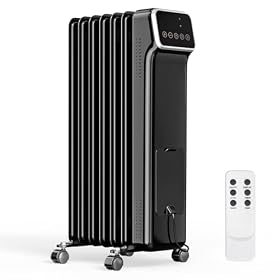
The best quiet space heater for sleep should provide steady warmth without distracting fan noise, bright displays, or unsafe operation. Compare heater types, wattage, controls, and safety features before buying.
Best quiet space heater for sleep
The best quiet space heater for sleep is usually one that produces steady heat with minimal airflow, has a reliable thermostat, and includes essential safety features such as tip-over and overheat protection. For the quietest operation, start with an oil-filled radiator or a fanless panel heater. Ceramic heaters can also work well, but their fans may produce an audible hum while running.
What makes a space heater quiet?
Noise can come from more than the heating element. Before choosing a heater for a bedroom, consider these sources:
Fan noise: Ceramic and other forced-air heaters use a fan to distribute heat. Some are relatively quiet, but the fan may still be noticeable in a silent bedroom.
Thermostat cycling: A heater may click when its thermostat turns the heating element on or off.
Vibration: Lightweight housings or uneven floors can create rattling or buzzing sounds.
Controls and displays: Bright LEDs, button beeps, and electronic alerts can disturb light sleepers.
Air movement: Even when the motor is quiet, a strong airflow can be noticeable near the bed.
Manufacturers do not always measure or report sound in a consistent way. Treat a low advertised decibel figure cautiously unless the measurement conditions are clearly explained.
Best heater types for sleeping
Oil-filled radiator: best for near-silent, steady heat
Oil-filled radiators heat a sealed fluid reservoir and release warmth gradually. They generally do not need a fan, so they avoid continuous motor noise and strong airflow. They can be a good choice for overnight bedroom heating when quiet operation is more important than fast warm-up.
Tradeoffs include a slower initial heat-up, a heavier body, and a hot surface. The thermostat may still click during cycling, depending on the design. Keep bedding, clothing, curtains, and other combustible materials well away from the heater.
Ceramic fan heater: best for faster warm-up
Ceramic heaters use an electric heating element and a fan. They can warm a small room or a nearby area quickly, and many offer adjustable heat levels or an energy-saving thermostat mode.
The fan is the main drawback for sleep. Look for a unit with a low-heat or low-fan setting, a sleep mode, a dimmable display, and quiet controls. A ceramic heater may be a better fit if you need fast warmth before bed but may be less suitable if any fan noise is distracting.
Fanless panel heater: best for quiet, low-profile heating
Fanless panel heaters warm the room through convection rather than powered airflow. They can operate quietly and have a slim shape that works well in some bedrooms. However, they may take time to raise the room temperature and can have hot surfaces.
Check the installation requirements carefully. Some panel heaters are designed for wall mounting rather than use as portable floor units. Do not substitute a portable heater for a permanently installed heating appliance unless the manufacturer specifically allows that setup.
Infrared heater: best for direct personal warmth
Infrared heaters warm people and nearby surfaces more directly than they warm the entire room. They can be quiet if they do not use a fan, but the comfort pattern is different from whole-room convection heating. You may feel warm near the heater while areas farther away remain cooler.
This type can make sense for a seated reading area or one side of a bedroom, but it is not automatically the best choice for maintaining an even overnight temperature.
Product prices and availability are accurate as of the date/time indicated and are subject to change. Any price and availability information displayed on Amazon.com at the time of purchase will apply to the purchase of this product.
How much wattage do you need?
For a typical household outlet, portable space heaters commonly operate near the circuit's substantial electrical load. The correct wattage depends on the room, insulation, outdoor temperature, ceiling height, and whether the heater is supplementing central heat.
Higher wattage does not necessarily mean a heater will be quieter or more comfortable. It usually means greater maximum heat output and electrical demand. A thermostat or lower heat setting can reduce cycling and energy use, but it does not make an undersized heater capable of heating a poorly insulated large room.
Use the manufacturer's room-size guidance as a starting point, and account for:
Drafty windows or doors
High ceilings
Exterior walls
Poor insulation
Very cold outdoor conditions
Open doors to adjoining rooms
Whether you want whole-room heat or only bedside warmth
Avoid using an extension cord or power strip unless the heater's instructions explicitly permit it. Plug a high-wattage heater directly into a properly functioning wall outlet, and do not share that outlet with another high-load appliance.
Product prices and availability are accurate as of the date/time indicated and are subject to change. Any price and availability information displayed on Amazon.com at the time of purchase will apply to the purchase of this product.
Features that matter for sleep
Adjustable thermostat
A thermostat is more useful than simply having high and low heat settings. It can cycle the heater as the room reaches the selected temperature, reducing unnecessary continuous operation. A heater may not hold the temperature perfectly, especially in a drafty room, so consider the thermostat a control aid rather than a precision climate system.
Low-heat mode
A lower output setting can reduce noise, cycling, and power demand. It is especially useful when the room only needs a small temperature increase.
Sleep mode and timer
A timer can shut the heater off after you fall asleep, but a timer is not a substitute for safe placement or supervision. Confirm whether the timer controls heating only, the fan, or the entire unit.
Dim or switchable display
Bright temperature readouts can be more disruptive than the heater's operating sound. A display-off feature is useful in a bedroom.
Tip-over and overheat protection
Choose a heater with safety shutoff features identified in the product documentation. Tip-over protection should stop heating if the unit falls, while overheat protection is intended to shut the unit down if internal temperatures become excessive.
These features reduce risk but do not make unattended operation automatically safe. Follow the manual's instructions about placement and overnight use.
Product prices and availability are accurate as of the date/time indicated and are subject to change. Any price and availability information displayed on Amazon.com at the time of purchase will apply to the purchase of this product.
Safe bedroom placement
Place the heater on a stable, level, nonflammable surface where it cannot be knocked over. Keep it well away from beds, blankets, curtains, clothing, furniture, and walkways. Do not cover it, place items on top of it, or position it where bedding can fall against the grille.
Keep the heater away from water and do not use a heater intended for dry indoor spaces in a bathroom unless the manufacturer specifically rates it for that environment. Inspect the plug and cord before use. Stop using the unit if the cord is damaged, the plug becomes unusually hot, or the outlet shows signs of discoloration or looseness.
A smoke alarm should be working in or near the bedroom. If the heater repeatedly trips a circuit breaker, becomes unusually hot, smells like burning plastic, sparks, or makes a new grinding or buzzing sound, unplug it if doing so is safe and discontinue use. Have electrical problems checked by a qualified professional.
How to choose the right quiet heater
Use this quick decision guide:
Choose an oil-filled radiator if near-silent operation and steady warmth matter most.
Choose a ceramic heater if you want faster heat and can tolerate low fan noise.
Choose a fanless panel heater if you want quiet convection and a low-profile design that fits the room.
Choose an infrared heater if you mainly want direct warmth in a particular spot.
For most sleepers, the best starting point is a heater with no fan, an adjustable thermostat, a low setting, a timer, a display-off option, and clearly documented tip-over and overheat protection. Confirm the heater's dimensions, placement rules, electrical requirements, and room-size guidance before buying.
FAQ
What is the quietest type of space heater for a bedroom?
An oil-filled radiator or another fanless heater is usually the quietest because it does not need a continuously running fan. It may warm the room more slowly than a forced-air ceramic heater.
Can I leave a space heater on while I sleep?
Follow the manufacturer's instructions, but conservative safety guidance is to avoid leaving a portable space heater running unattended or while sleeping. Use safer whole-home heating when available, and never operate a heater near bedding or other combustible materials.
Are ceramic space heaters quiet?
Ceramic heaters often use a fan, so they are usually not silent. A low setting, sleep mode, or fan designed for quieter operation may reduce the sound, but the actual noise varies by design and room conditions.
What wattage space heater is best for a bedroom?
The appropriate wattage depends on room size, insulation, drafts, ceiling height, and local conditions. Use the manufacturer's room-size guidance rather than assuming that the highest wattage is best, and plug the heater directly into a suitable wall outlet.
Why does my quiet space heater make clicking noises?
Clicking commonly comes from the thermostat or heating materials expanding and contracting as the unit cycles. A new loud click, buzzing, grinding, burning smell, damaged cord, or unusually hot plug is a reason to stop using the heater and consult the manufacturer or a qualified professional.