The best bedroom space heater is quiet, thermostat-controlled, and equipped with reliable tip-over and overheat protection. Compare ceramic and oil-filled designs, then match wattage and placement to your room.
A good bedroom space heater should warm the room without creating distracting noise, harsh light, or unnecessary safety concerns. For most bedrooms, look for a thermostat, multiple heat settings, overheat protection, and a tip-over switch. A ceramic heater is usually best for quick, targeted warmth; an oil-filled radiator is often better when quiet operation and steady heat matter more than fast startup.
What to look for in a bedroom space heater
Match the wattage to the room
Most portable electric space heaters use a maximum of about 1,500 watts on a standard household circuit, but the right setting depends on the room, insulation, outdoor temperature, and drafts.
As a general starting point:
Small bedrooms: A lower heat setting may be sufficient, especially in a well-insulated room.
Medium bedrooms: A 1,500-watt heater can provide more useful heating capacity, but it should still be controlled by a thermostat rather than run continuously at full power.
Large, poorly insulated, or very cold rooms: A portable heater may provide supplemental warmth but may not replace the room’s main heating system.
A higher wattage does not automatically mean a heater is better. It generally means more heat output and higher electricity use when the heating element is on. A thermostat can reduce wasted operation by switching the heater off after the room reaches the selected temperature.
Prioritize quiet operation
Noise is especially important in a bedroom. Fan-based ceramic heaters move warm air quickly, but their fan can produce a steady hum. Oil-filled radiators heat more gradually and are typically quieter because they do not need a fan to distribute heat.
Check the product description for information about fan noise, operating modes, and display brightness. If you are a light sleeper, avoid choosing a heater based only on maximum wattage. A slightly slower but quieter heater may be more comfortable overnight.
Choose useful controls
The most helpful bedroom controls include:
Adjustable thermostat: Maintains a selected temperature instead of running continuously.
Low and high heat settings: Let you reduce heat output and energy use once the room is comfortable.
Timer or automatic shutoff: Helpful for warming the room before bedtime or limiting operation.
Remote control: Convenient, but it should not replace manual controls on the heater.
Digital display with dimming or a display-off option: Better for dark bedrooms.
Do not assume that a timer makes unattended operation risk-free. Follow the manufacturer’s instructions, and never cover the heater or place bedding, clothing, or other materials near it.
Ceramic versus oil-filled heaters for a bedroom
Ceramic heaters
Ceramic heaters use an electric heating element and a fan to deliver warm air. They are a practical choice when you want heat quickly or need to direct warmth toward a specific part of the room.
Advantages:
Warm air reaches you quickly
Usually compact and easy to move
Often include several heat settings
Useful for short heating periods
Tradeoffs:
Fan noise may be noticeable while sleeping
Airflow can feel more concentrated
The fan may continue briefly after the heating element switches off, depending on the design
Oil-filled radiators
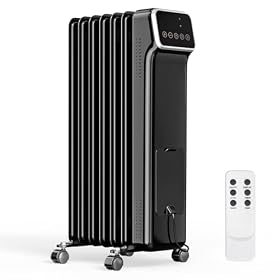
Oil-filled radiators heat an internal fluid that gradually warms the surrounding air. They take longer to heat up, but they provide steady radiant and convective warmth without a fan.
Advantages:
Generally quiet during operation
Steady heat that suits longer use
No fan blowing directly across the room
Often comfortable for overnight room temperature maintenance when used exactly as directed
Tradeoffs:
Slower startup
Larger and heavier than many ceramic heaters
Exterior surfaces can become hot
May be less convenient to move between rooms
Neither type is automatically safer simply because of its heating method. Safety controls, stable placement, clearances, and correct operation matter more than the label on the heater.
Product prices and availability are accurate as of the date/time indicated and are subject to change. Any price and availability information displayed on Amazon.com at the time of purchase will apply to the purchase of this product.
Safety features that matter most
Look for these features when comparing bedroom heaters:
Tip-over switch: Shuts the heater off if it is knocked over.
Overheat protection: Interrupts operation if internal temperatures become too high.
A stable, broad base: Reduces the chance of accidental tipping.
A grounded plug and intact power cord: The plug and cord should not be damaged or modified.
Clear operating instructions: The manual should specify required clearances and acceptable use.
Place the heater on a level, hard, nonflammable surface. Keep it well away from beds, curtains, clothing, paper, furniture, and other combustible materials. Do not place it on a bed, chair, carpeted surface that makes it unstable, or any location where it can be covered.
Plug the heater directly into a wall outlet unless the manufacturer specifically provides different instructions. Avoid extension cords, power strips, and adapters for high-wattage heaters because they can overheat. Do not run the cord under rugs or across walkways.
A bedroom heater should not be used in a bathroom or other damp area unless it is specifically approved for that environment. Keep smoke alarms working, and stop using the heater if you notice a damaged cord, scorching, unusual odor, sparking, or repeated breaker trips. A qualified electrician should evaluate recurring electrical problems.
Product prices and availability are accurate as of the date/time indicated and are subject to change. Any price and availability information displayed on Amazon.com at the time of purchase will apply to the purchase of this product.
The best choice by bedroom use
For quiet overnight warmth
Choose an oil-filled radiator with an adjustable thermostat and multiple heat settings. Allow extra time for it to warm the room, and follow the manufacturer’s guidance about unattended or overnight operation.
For fast warmth before bed
Choose a ceramic heater with a thermostat, low setting, timer, tip-over switch, and overheat protection. A display-dimming feature is useful if bright lights disturb your sleep.
For a small bedroom or personal heating
A compact heater with a lower setting may be enough if the door and windows are reasonably sealed. Use the thermostat instead of leaving the heater on its highest setting continuously.
For a drafty bedroom
First reduce drafts around windows and doors where practical. A heater can add supplemental warmth, but a portable unit may struggle to maintain a comfortable temperature in a room with major heat loss. If the room remains cold despite continuous operation, inspect the building’s insulation and primary heating system rather than simply buying a larger portable heater.
Product prices and availability are accurate as of the date/time indicated and are subject to change. Any price and availability information displayed on Amazon.com at the time of purchase will apply to the purchase of this product.
How to use a bedroom space heater safely
Inspect the heater, plug, and cord before each use.
Set it on a stable, level, hard surface with the manufacturer’s required clearance.
Keep bedding, clothing, curtains, furniture, and paper away from the heater.
Plug it directly into an appropriate wall outlet.
Select the lowest setting that maintains a comfortable temperature.
Keep the air intake and outlet unobstructed.
Turn it off when leaving the room unless the manual specifically permits the intended operating mode.
Let the unit cool as instructed before moving or storing it.
Do not use a space heater to dry clothes, warm bedding, or heat an enclosed cabinet. Never modify its safety switch or operate it after it has been dropped or visibly damaged.
How much does a bedroom space heater cost to run?
Electricity use depends on the heater’s wattage, the time it is actively heating, and your local electricity rate. A heater rated at 1,500 watts uses 1.5 kilowatt-hours for every hour it runs continuously at full power. A thermostat may reduce total operating time, but the actual savings depend on room conditions and the selected temperature.
For lower energy use, improve draft control, close doors to unused rooms, use the low setting when adequate, and avoid heating an empty room. A portable heater is usually best treated as supplemental heat rather than a replacement for an efficient whole-home heating system.
When a different solution is better
A space heater may not be appropriate if the room requires constant high-output heating, has unsafe wiring, or cannot provide the clearances the heater requires. Persistent cold, condensation, drafts, or a malfunctioning central heating system may call for building repairs or professional HVAC service.
If a heater repeatedly trips the breaker, smells hot, makes unusual electrical noises, or has a damaged cord, unplug it and stop using it. Replacement is generally more sensible than attempting to repair an internal heating or safety component unless the manufacturer provides an approved replacement part and repair procedure.
FAQ
What type of space heater is best for a bedroom?
A ceramic heater is usually best for fast, targeted warmth, while an oil-filled radiator is often better for quiet, steady heating. Choose the type based on whether startup speed or low noise matters more to you.
Is it safe to leave a space heater on while sleeping?
Only operate a heater overnight if the manufacturer’s instructions specifically allow that use. Keep it on a stable, nonflammable surface with clear space around it, plug it directly into a wall outlet, and use working smoke alarms. Never cover the heater or use a damaged unit.
What wattage space heater do I need for a bedroom?
Many bedrooms can use a heater with a maximum setting near 1,500 watts, but the appropriate output depends on room size, insulation, drafts, and outdoor temperature. Use the lowest setting that maintains comfort and rely on a thermostat rather than continuous maximum heat.
Are oil-filled heaters quieter than ceramic heaters?
Usually, yes. Oil-filled radiators generally do not need a fan, so they tend to produce less operating noise. Ceramic heaters warm a room faster but may have an audible fan.
Why does my bedroom space heater keep shutting off?
It may be reaching the thermostat setting, activating overheat protection because airflow is blocked, detecting a tip-over condition, or encountering an electrical problem. Check the placement, air openings, filter if the model has one, outlet, and cord. If it still shuts off unexpectedly or trips a breaker, stop using it and follow the manufacturer’s service guidance.