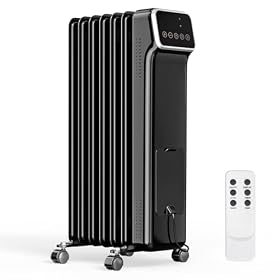
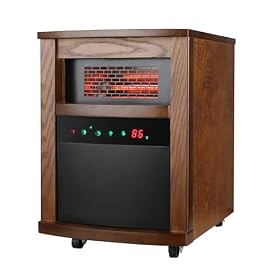
The best space heater for a drafty room is usually one that matches the room’s heat loss and your usage pattern—not simply the model with the highest advertised wattage. Use a fan-forced ceramic heater for quick spot heating, an oil-filled radiator for quieter steady warmth, or an infrared heater for warming people and nearby surfaces. Seal the draft separately because a heater cannot efficiently overcome a large air leak.
A 1500-watt space heater with a thermostat and strong safety controls is a practical starting point for many drafty rooms, but the best type depends on how you use the space. Choose a fan-forced ceramic heater for quick heat, an oil-filled radiator for quiet longer-duration heating, or an infrared heater when you mainly need warmth directed at people or a specific area.
A heater will not stop cold air from entering. For the best result, reduce the draft at the same time by checking doors, windows, baseboards, and other air leaks.
What to look for in a space heater for a drafty room
Match wattage to the available circuit
Most portable electric heaters sold for household use are designed around a maximum output near 1,500 watts. At 120 volts, that is roughly 12.5 amps, so the heater can use much of a standard household circuit’s capacity.
Before buying, consider what else shares the circuit. Avoid running a high-wattage heater on a circuit already powering a microwave, hair dryer, toaster, or other demanding appliance. Plug the heater directly into a properly grounded wall outlet, not an extension cord, power strip, or plug adapter unless the manufacturer specifically permits it.
A higher wattage does not automatically make a heater suitable for a larger or draftier room. It may instead overload a circuit or cycle less efficiently in a small room. Follow the heater’s room-size guidance as a starting point, but account for ceiling height, insulation, windows, and how severe the draft is.
For reference, 1,500 watts is about 5,100 BTU per hour of electric heat. That output may be adequate for a modest room in some homes, but a poorly insulated room with substantial air leakage can require more heat than a portable unit can comfortably provide.
Choose the heater type based on how you use the room
Ceramic fan heater: best for quick spot heating
A ceramic heater uses a fan to move air across a heated element. It can warm the occupied part of a room relatively quickly, making it useful for a home office, bedroom before bedtime, or a seating area near a cold window.
Look for:
- Adjustable heat settings
- A thermostat rather than only a simple on/off switch
- Oscillation if you need to spread warmth across a wider area
- Tip-over protection and overheat protection
- A fan-only setting if you want air movement when heat is not needed
The tradeoff is fan noise and moving air. If the room is extremely drafty, the fan may make the air feel less comfortable even while the heater is producing heat.
Oil-filled radiator: best for quiet, steady heat
An oil-filled radiator heats its metal body and releases warmth gradually. It usually takes longer to feel warm than a fan heater, but it operates quietly and provides more even heat over extended periods.
This type can work well in a bedroom, nursery, or office where noise is distracting. Its surface becomes hot, so it needs generous clearance from bedding, curtains, furniture, and children or pets. The radiator also remains hot for a while after it is switched off.
Choose an oil-filled model when you want sustained background heat rather than immediate warm air. It is not a solution for a severe draft entering under a door or through a damaged window seal.
Infrared heater: best for directional warmth
Infrared heaters warm nearby people and surfaces more directly than a conventional fan heater. They can be useful when you occupy one area of a large or drafty room and do not need to heat every cubic foot of air.
They are less ideal if your goal is uniform whole-room heating from a single location. Placement and line of sight matter, and the heater still requires the manufacturer’s specified clearance from combustible materials.
Features that matter more than marketing claims
An adjustable thermostat
A thermostat lets the heater cycle on and off as the room reaches the selected temperature. This is generally more useful than a unit with only low and high settings, especially in a room that warms unevenly.
A built-in thermostat measures the temperature near the heater, not necessarily where you are sitting. Avoid placing the heater next to a cold exterior door, directly beneath a drafty window, or in a confined corner where its sensor may not represent the rest of the room.
Tip-over and overheat protection
For a portable heater, look for a tip-over switch that shuts the unit off if it falls and overheat protection that cuts power if internal temperatures become excessive. These features reduce risk but do not make unsafe placement acceptable.
Use a stable, level, nonflammable surface. Keep the heater away from curtains, bedding, paper, clothing, furniture, and other combustible materials. Never cover it or use it to dry clothing.
Timer and eco modes
A timer can reduce unnecessary run time, but it should not be treated as permission to leave a heater operating in an unsafe location. Eco modes may reduce cycling or adjust the output, but their behavior varies by design. Prioritize basic temperature control and safety features over a long list of operating modes.
Visible controls and a stable base
In a drafty room, you may adjust the heater more often as outdoor temperatures change. Controls that are easy to read and a base that resists tipping are practical advantages. A remote control is convenient, but it does not replace a physical power switch or safe placement.
How to use a space heater in a drafty room
- Find the draft source first. Check the bottom and edges of exterior doors, window sashes, trim, electrical outlets on exterior walls, and gaps around baseboards.
- Block temporary drafts. Use a door draft stopper, removable window film, curtains, or suitable weatherstripping where appropriate. Do not block required vents or combustion-air openings.
- Place the heater on a hard, level floor. Keep it away from traffic paths and locations where it can be knocked over.
- Keep clear space around the heater. Follow the clearance distances in the manual; if the manual is unclear, use a conservative gap and keep all combustibles well away.
- Aim heat toward the occupied area, not directly at curtains or furniture. Oscillation can help distribute heat, but it cannot compensate for a major air leak.
- Use the thermostat instead of leaving the unit on maximum. Start at a moderate setting and adjust based on the room’s actual comfort.
- Inspect the cord and plug before use. Stop using the heater if the cord, plug, outlet, or housing becomes damaged or unusually hot.
Do not use a portable electric heater in a wet location unless it is specifically designed and approved for that environment. Keep it away from water, and follow the manufacturer’s instructions for bathroom or damp-area use.
When a portable space heater is not the right fix
A space heater may be the wrong primary solution if:
- The room remains cold because of a major window, door, or wall leak.
- The heater runs continuously without reaching a comfortable temperature.
- The circuit trips or the outlet becomes hot.
- You need to heat several rooms for long periods.
- The room has an existing central heating problem.
- You need unattended or overnight heating but cannot maintain safe placement and operation.
Seal obvious air leaks first and have persistent heating problems checked by a qualified HVAC professional or electrician as appropriate. If the heater repeatedly trips a breaker, produces a burning smell, makes abnormal noises, or has a damaged cord, unplug it and stop using it. Do not bypass a safety switch or attempt electrical repairs unless you are qualified to do so.
A replacement heater is reasonable when the current unit lacks a working thermostat or tip-over protection, has damaged electrical parts, shows signs of overheating, or cannot maintain safe operation. Otherwise, correcting the draft and choosing a heater type suited to your usage may be more effective than simply buying a larger unit.