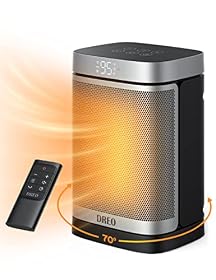
Programmable space heater for a home office schedule
A programmable space heater can warm a home office before you start work and reduce heating when the room is empty. Here is what to look for in scheduling, thermostat accuracy, wattage, noise, and safety.
Programmable space heater for a home office schedule
A programmable space heater for a home office should do more than offer an on/off timer. Look for a heater with a thermostat, a schedule or delayed-start function, suitable wattage for the room, quiet operation, and safety features such as overheat protection and tip-over shutoff. The best setup can warm the office before your workday, maintain a comfortable temperature while you work, and stop heating when you leave.
What “programmable” means on a space heater
Heater controls vary widely, so check the manual or product description carefully. “Programmable” may refer to several different functions:
Countdown timer: Turns the heater off after a selected period. This is useful for shutting down at the end of a work session but may not start the heater automatically in the morning.
Delayed start: Allows the heater to turn on after a set delay.
Weekly schedule: Lets you set different heating periods for weekdays and weekends.
Thermostat control: Cycles the heater on and off to maintain a target temperature rather than running continuously.
App or smart-home scheduling: Uses a phone app or compatible smart-home platform to control operating times. Compatibility and remote-control behavior vary by model.
For a regular home-office routine, a true schedule or reliable delayed start is more useful than a basic countdown timer. If you only need warmth during occasional meetings, a thermostat and simple timer may be enough.
Features that matter for a home-office schedule
A real thermostat
A thermostat helps prevent the room from becoming unnecessarily hot and can reduce continuous operation. Look for a clearly stated temperature range and controls that are easy to adjust. A heater’s built-in sensor may read warmer or cooler than the opposite side of the room, especially if the unit is placed near a desk, draft, window, or exterior wall.
Avoid placing the heater under the desk or directly beside your chair if that causes the sensor to detect localized heat. Keep it on a solid, level surface with the clearances specified by the manufacturer.
Weekday and weekend settings
A home office schedule often differs from a normal household schedule. A useful programmable heater may let you set separate on and off times for workdays and days when the office is not occupied. If it only stores one daily schedule, confirm that it can still meet your routine without frequent resets.
Power-loss behavior
Some electronic heaters retain their schedule after a brief power interruption, while others reset to standby or require manual activation. This matters if you expect the office to be warm before you arrive. Check the instructions for what happens after power is interrupted; do not assume that a heater will restart automatically.
Quiet operation
Fan-forced ceramic heaters can circulate heat quickly, but the fan may be noticeable during calls or focused work. Oil-filled radiators generally heat more gradually and do not use a blower, although they can take longer to warm the room. A low setting, quiet mode, or adjustable thermostat may be more useful than maximum heat in a small office.
If your work includes video meetings or audio recording, consider noise as a primary buying factor rather than an afterthought. A heater that cycles less often may also be less distracting than one with a constantly running fan.
Safety controls
For an office heater that may operate on a schedule, prioritize:
Tip-over shutoff
Overheat protection
A grounded plug where required by the manufacturer
A visible power indicator
Controls that prevent accidental temperature or schedule changes
A safety certification mark recognized in your region
Never cover a heater, place it against curtains or furniture, or run its cord under rugs. Plug a portable heater directly into a properly installed wall outlet unless the manufacturer specifically permits another arrangement. Avoid using an extension cord or power strip for a space heater unless the manufacturer and a qualified electrician confirm that the setup is appropriate.
Product prices and availability are accurate as of the date/time indicated and are subject to change. Any price and availability information displayed on Amazon.com at the time of purchase will apply to the purchase of this product.
Choose wattage based on the office, not the schedule
Programming controls when the heater runs; they do not increase its heating capacity. A small office with a closed door may need less heat than a larger room with high ceilings, drafty windows, or poor insulation.
As a general starting point, many portable electric heaters use a lower setting around 750 watts and a higher setting around 1,500 watts, but the exact settings differ by product. Check the heater’s nameplate and manual before purchase. Higher wattage can warm a space faster, but it also draws more electrical power.
A heater may struggle to maintain a comfortable temperature if the office is open to other rooms or loses heat through windows and doors. In that situation, improving weatherstripping or closing the door may help more than choosing a larger portable heater. Do not use a portable heater as a substitute for required building heating in freezing conditions unless the manufacturer and local safety guidance support that use.
Product prices and availability are accurate as of the date/time indicated and are subject to change. Any price and availability information displayed on Amazon.com at the time of purchase will apply to the purchase of this product.
Ceramic heater or oil-filled radiator?
Ceramic heater
A ceramic heater is often a practical choice when you want quick warm-up, compact size, and a fan to distribute heat. It may work well for an office that is cold at the beginning of the day and needs a fast temperature change. The tradeoff is fan noise and airflow, which can be distracting or blow papers around.
Oil-filled radiator
An oil-filled radiator heats more slowly but provides steady radiant heat without a fan. It can be a better fit for quiet work, reading, or long sessions where gradual, consistent warmth matters. It is typically larger and its exposed surfaces can become hot, so placement and clearance are especially important.
Neither type is automatically more efficient for the same amount of heat delivered. The thermostat, operating time, insulation, and selected power level have a larger effect on energy use than the heater’s marketing category.
Product prices and availability are accurate as of the date/time indicated and are subject to change. Any price and availability information displayed on Amazon.com at the time of purchase will apply to the purchase of this product.
How to set up a scheduled office heater
Measure the space and identify drafts. Note the room size, ceiling height, windows, and whether the door can remain closed.
Choose a clear location. Keep the heater on a level, stable surface with the manufacturer’s required clearance from walls, furniture, curtains, paper, and clothing.
Set a low starting temperature. Increase it gradually rather than beginning at the maximum setting.
Program the preheating period. Start with enough lead time to make the room comfortable, but avoid leaving the heater running unattended for long periods unless the manufacturer specifically permits scheduled operation.
Set an automatic shutoff. Have the heater stop when the workday ends or when the room will be empty.
Check the first few cycles while present. Confirm that the thermostat cycles normally, the plug and outlet remain cool, and the heater does not shift or become obstructed.
Review the schedule after a power interruption. Verify whether the settings remain active or need to be re-entered.
A schedule should not override basic supervision and safety. If the office is in a separate part of the home, avoid operating a portable heater while nobody is available to respond to an unusual smell, tripped breaker, overheating plug, or other problem.
Electrical considerations for a home office
A portable heater can use a substantial portion of a household circuit’s capacity. Computers, monitors, printers, chargers, and other office equipment may share the same circuit. If the circuit breaker trips, the outlet is discolored, the plug feels hot, or you notice a burning odor, stop using the heater and unplug it when safe to do so. Do not repeatedly reset a breaker or replace it with a higher-rated breaker.
Have a qualified electrician inspect persistent electrical problems. Follow the heater’s instructions, local electrical requirements, and any workplace or building rules.
When a programmable heater is not the right solution
A programmable space heater may not be appropriate if:
The room is large, open, or poorly insulated
You need whole-home heating rather than personal comfort
The heater would need to run while the home is unoccupied
The outlet or circuit cannot safely support the electrical load
You need precise temperature control throughout the entire room
The heater would sit where children, pets, papers, or furniture could contact it
For occasional desk comfort, a lower-power heater or personal heating approach may be more suitable. For a consistently cold room, address drafts or consult a heating professional instead of relying on a portable heater continuously.
FAQ
Can I schedule a space heater to turn on before I start work?
Only if the heater supports delayed start, a stored schedule, or compatible smart control. A basic countdown timer usually turns the heater off after a selected period and may not provide automatic morning startup. Check the manual for scheduling and power-loss behavior.
What wattage is suitable for a home office?
The right wattage depends on room size, insulation, ceiling height, drafts, and whether the door is closed. Many portable heaters offer lower and higher settings, commonly including a setting near 750 watts and a maximum near 1,500 watts, but verify the actual specifications for the model and circuit.
Are oil-filled radiators quieter than ceramic space heaters?
Oil-filled radiators generally do not use a fan, so they are often quieter during operation. Ceramic heaters can warm a room more quickly but may produce audible fan noise. Choose based on whether quick warm-up or quiet, gradual heat matters more for your office.
Is it safe to leave a programmable space heater running while I am away?
Do not assume that scheduled operation is safe while the room is unattended. Follow the manufacturer’s instructions and local safety guidance, keep the heater clear of combustibles, and stop using it if the plug or outlet overheats, the breaker trips, or you notice an unusual smell or sound.