Space heater for a cabin that is only used on weekends
The best space heater for a weekend cabin depends on whether you need quick warmth when you arrive, low-noise heating overnight, or limited freeze protection while the cabin is empty. Compare heater types, wattage, controls, and safety features before choosing.
A weekend cabin usually needs a heater that can warm the room quickly when you arrive, operate quietly while you sleep, and remain safe around wood, bedding, pets, and limited supervision. For most single-room cabins, a thermostat-controlled ceramic heater is the practical choice for fast warm-up. An oil-filled radiator can be better for quiet overnight heat, while freeze protection requires extra caution and should not replace winterizing the cabin.
Start with how you will use the heater
There are three different heating jobs a weekend cabin heater may need to handle:
Quick warm-up: You arrive to a cold room and want heat quickly.
Overnight comfort: You want steady, quiet heat while sleeping.
Limited freeze protection: You want to reduce the risk of freezing during short absences.
One heater may not be ideal for all three jobs. A fast fan heater is convenient when you arrive but can be noisier. An oil-filled radiator warms more gradually but generally provides quiet, steady heat. A heater intended for unattended or low-temperature operation must have controls and safety features specifically suited to that purpose.
Never rely on a portable space heater as the only protection for plumbing in a vacant cabin. If freezing weather is possible, follow the cabin’s winterization procedure, protect or drain vulnerable plumbing, and use any low-temperature equipment only as a supplemental measure.
Choose the heater type
Ceramic heater: best for quick arrival warm-up
A ceramic heater uses a fan to move air over a heated ceramic element. It is usually compact and can distribute warm air quickly, making it a useful choice for a small living room, bedroom, or cabin office.
Look for:
An adjustable thermostat rather than only a high/low switch
A lower heat setting for overnight use
Tip-over shutoff
Overheat protection
A stable base and a clearly visible power switch
The fan creates some noise and can stir dust. Keep the intake and outlet clear, especially in a cabin that may sit unused for long periods.
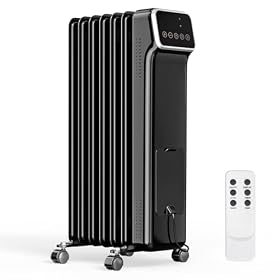
Oil-filled radiator: best for quiet overnight heating
An oil-filled radiator heats a sealed internal fluid and releases warmth gradually. It does not use a fan, so it is often a better fit for sleeping areas where noise matters.
Its tradeoffs are slower warm-up and a larger, heavier body. The surface and grille can become hot, so maintain the clearance specified by the manufacturer and keep bedding, clothing, and furniture away from it. Do not use it to dry clothes.
Infrared heater: useful for direct, nearby warmth
Infrared models warm people and nearby surfaces directly rather than relying only on circulating room air. They can feel comfortable when you are sitting in one area, but they may not heat an entire poorly insulated cabin evenly. Check the manufacturer’s instructions for clearance and placement, particularly around wood walls and furnishings.
Product prices and availability are accurate as of the date/time indicated and are subject to change. Any price and availability information displayed on Amazon.com at the time of purchase will apply to the purchase of this product.
Match wattage to the cabin room
Portable electric heaters commonly offer a high setting around 1,500 watts, but the correct choice depends on room size, insulation, ceiling height, outdoor temperature, and drafts. A small, well-insulated room needs less heating than a large open cabin with uninsulated walls.
Use the heater’s lower setting when it maintains a comfortable temperature. Lower output can reduce cycling and electrical demand, but it does not make an overloaded circuit safe.
Check the electrical supply before buying
A 1,500-watt heater on a 120-volt circuit draws about 12.5 amps. That leaves limited capacity on a typical 15-amp branch circuit. Before using one:
Identify what else shares the circuit, such as lights, a refrigerator, coffee maker, microwave, or pump.
Plug the heater directly into a properly grounded wall outlet.
Do not use an extension cord, power strip, or outlet adapter unless the heater manufacturer specifically permits it and the cord is correctly rated.
Stop using the heater if the plug, outlet, or cord becomes hot, discolored, loose, or damaged.
If a breaker trips, do not repeatedly reset it. Reduce the load and have a qualified electrician investigate persistent problems.
A lower-wattage heater may be more practical in an older cabin or on a circuit that also powers other appliances, but it may take longer to warm the room.
Product prices and availability are accurate as of the date/time indicated and are subject to change. Any price and availability information displayed on Amazon.com at the time of purchase will apply to the purchase of this product.
Features that matter in a weekend cabin
Adjustable thermostat
A thermostat turns the heater on and off to maintain a selected temperature. This is more useful than a heater with only a continuously running high setting, especially when the cabin temperature changes overnight.
A thermostat is not the same as precise freeze protection. If the cabin may fall below freezing, verify the operating range and low-temperature behavior in the manual rather than assuming any thermostat can safely protect plumbing.
Tip-over and overheat protection
Tip-over shutoff is important if the heater could be bumped, placed on an uneven floor, or accessed by children or pets. Overheat protection adds another layer of safety but does not permit blocked vents or unsafe placement.
Timer and remote control
A timer can help preheat the cabin before arrival, but only if the heater, electrical system, and surrounding area are suitable for that operating pattern. A remote or Wi-Fi feature is convenient, but it does not replace an in-person check for a tripped breaker, water leak, blocked heater, or changing weather.
If remote operation is important, select a model whose manual clearly explains restart behavior after a power interruption. Some heaters do not resume heating automatically after power is restored.
Low-temperature or freeze-protection mode
Some heaters advertise a frost-protection setting that turns the unit on when the surrounding temperature drops below a specified point. Treat this as a supplemental feature, not a guarantee. Cold spots inside walls, plumbing near exterior surfaces, power failures, and equipment faults can still cause damage.
For an unoccupied cabin, winterization is the more dependable strategy. Consider professional advice if the property has vulnerable plumbing, a private well, propane equipment, or a history of freezing.
Product prices and availability are accurate as of the date/time indicated and are subject to change. Any price and availability information displayed on Amazon.com at the time of purchase will apply to the purchase of this product.
Placement matters more in a small cabin
Place the heater on a level, hard, nonflammable surface with the clearances stated in its manual. Keep it away from:
Beds, curtains, blankets, clothing, and upholstered furniture
Doors or walkways where it can be knocked over
Water, sinks, wet boots, and damp floors
Combustible walls or cluttered corners
Areas where children or pets can pull on the cord
Do not place a portable heater inside a bathroom or other damp location unless the product is specifically designed and approved for that use. Do not operate it inside a closet, cabinet, vehicle, tent, or enclosed area not identified by the manufacturer.
A working smoke alarm and carbon monoxide alarm are important in a cabin, especially where a wood stove, fireplace, propane appliance, or generator is present. A portable electric heater does not produce carbon monoxide, but other fuel-burning equipment can.
A practical choice by cabin scenario
Small insulated cabin used mainly for short visits: Choose a compact ceramic heater with thermostat, lower heat setting, tip-over shutoff, and overheat protection.
Bedroom where quiet operation matters: Consider an oil-filled radiator with thermostat control, provided you have enough floor space and can maintain safe clearances.
Open-plan or poorly insulated cabin: A portable heater may provide comfort in the occupied area but may not heat the entire space evenly. Improve drafts and insulation where practical rather than depending on a small heater to overcome major heat loss.
Cabin exposed to freezing weather while empty: Winterize the plumbing first. If supplemental heating is still appropriate, use a model with clearly documented low-temperature operation and arrange periodic in-person checks.
Older wiring or limited electrical capacity: Favor a lower heat setting or have the electrical system evaluated before using a high-wattage heater.
Before leaving the cabin
If the heater will remain on while you are away, follow the product manual exactly and confirm that the model is intended for that operating pattern. In general, portable heaters should not be left running unattended unless the manufacturer explicitly permits the use case and the installation is appropriate.
Before departure, check that:
The heater is upright and unobstructed.
The cord and plug are undamaged and not warm.
Nothing flammable is within the required clearance.
Smoke and carbon monoxide alarms are working.
The circuit is not overloaded.
Doors and windows are closed if that is part of the heating plan.
The cabin’s winterization and water shutoff procedures are complete.
If you need dependable heat for long unattended periods, a properly installed permanent heating system may be more appropriate than a portable heater. Ask a qualified heating or electrical professional to assess the cabin rather than improvising with multiple portable units.
When to replace the heater
Replace a heater if it has a damaged cord, loose plug, cracked housing, unreliable controls, repeated overheating, or a tip-over switch that does not work. Do not open or bypass safety components. If the heater trips a breaker on a known-good circuit, smells of burning plastic, makes unusual electrical noises, or causes outlet discoloration, unplug it and stop using it.
For a weekend cabin, the most useful purchase is usually a heater with a real thermostat, multiple heat settings, tip-over shutoff, overheat protection, and a wattage that the cabin’s electrical circuit can safely support. Choose ceramic for fast warm-up, oil-filled for quiet steady heat, and treat freeze protection as a backup measure—not a substitute for preparing the cabin for cold weather.
FAQ
What type of space heater is best for a weekend cabin?
A thermostat-controlled ceramic heater is usually the most practical choice for quickly warming a small cabin when you arrive. An oil-filled radiator may be preferable for quiet overnight heating, while neither should replace proper winterization in freezing weather.
Can I leave a space heater on in an empty cabin?
Only if the specific heater and installation are explicitly suitable for that use, and the manufacturer permits it. Portable heaters should generally not be left unattended. Arrange in-person checks and use proper winterization when freezing is possible.
How many watts should a cabin space heater have?
The required wattage depends on room size, insulation, drafts, ceiling height, and outdoor temperature. Many portable heaters have a high setting near 1,500 watts, which draws about 12.5 amps on a 120-volt supply. Confirm that the circuit can handle the heater along with other appliances.
Can a space heater prevent cabin pipes from freezing?
It may provide supplemental heat, but it is not a dependable substitute for winterizing plumbing. Power failures, cold spots, poor air circulation, and heater faults can still allow pipes to freeze.
Should I use an extension cord with a cabin space heater?
Use a properly grounded wall outlet and follow the manufacturer’s instructions. Do not use a power strip or extension cord unless the manufacturer specifically allows it and the cord is correctly rated. A warm or discolored plug or outlet is a reason to stop using the heater.