If your space heater is not getting hot, first check the filter, air inlet, outlet, thermostat, heat setting, and power connection. Many heaters also cycle off normally when the room reaches the set temperature.
If your space heater is not getting hot, start by checking the filter and air openings, then confirm the heat mode and thermostat setting. A blocked intake, clogged outlet, fan-only mode, or built-in overheat protection can make a working heater feel cold. Unplug the heater before cleaning or inspecting it, and stop using it if you notice a burning smell, damaged cord, sparks, unusual buzzing, or a hot plug or outlet.
Check the filter and air openings
Dust buildup is one of the most common reasons a space heater stops producing useful heat. A blocked filter or intake restricts airflow, which can trigger the heater's overheat protection or reduce the amount of warm air coming out.
Turn the heater off and unplug it.
Find the air-intake grille and removable filter, if the model has one.
Clean the filter according to the owner's manual. Some filters can be vacuumed; others may be washable, but do not wash one unless the manufacturer says it is safe.
Remove dust from the intake and outlet grilles with a soft brush or vacuum attachment.
Reinstall the filter correctly and leave the heater unplugged until any washed part is completely dry.
Do not operate the heater with a required filter removed. A filter that is cracked, permanently clogged, or no longer fits securely should be replaced with the correct part for that heater.
Look for a blocked hose, grille, or outlet
Portable space heaters usually do not have a hose, but their airflow path can still be obstructed. Check that curtains, bedding, furniture, pet hair, and dust are not covering the front outlet or rear intake. Keep the heater on a hard, level, nonflammable surface with the clearance specified in its manual.
Never push objects into the grille to clear a blockage. If dust is packed inside the heater where you cannot reach it safely, have it serviced or replace the unit rather than opening the housing.
Replacement filter for a heater with a clogged or damaged filter
Product prices and availability are accurate as of the date/time indicated and are subject to change. Any price and availability information displayed on Amazon.com at the time of purchase will apply to the purchase of this product.
Confirm the heat mode and thermostat
The heater may be running without producing heat because it is in a non-heating mode. Check the controls for:
Fan-only or air-circulation mode
Low heat instead of high heat
Eco or energy-saving mode
Frost-protection mode
A timer that has ended
A thermostat setting below the current room temperature
Set the thermostat several degrees above the room temperature and select a normal heating mode. Some heaters pause after reaching the set temperature; this cycling is normal. If the display shows a target temperature rather than a power level, raising the target temporarily can confirm whether the heating element turns on.
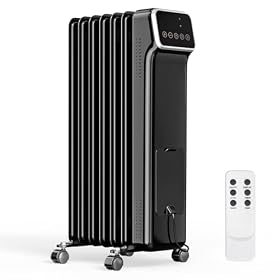
Replacement heater for a failed or unsafe older unit
Product prices and availability are accurate as of the date/time indicated and are subject to change. Any price and availability information displayed on Amazon.com at the time of purchase will apply to the purchase of this product.
Check the setup and room conditions
A heater can feel ineffective even when its heating element is working. A large, drafty, or poorly insulated room may lose heat faster than a small portable heater can add it. Open doors, high ceilings, exterior-wall drafts, and cold floors can make the room remain chilly.
Also check whether the heater is aimed into an open area rather than toward a wall or blocked furniture. A fan heater may blow warm air only after a short startup delay. Oil-filled radiators heat more gradually and may not feel hot immediately after being switched on.
Do not use a space heater to dry clothes, cover it with anything, or place it close to water. Follow the clearance and placement instructions for the specific model.
Slower, steady heat for a room where fan heat feels ineffective
Product prices and availability are accurate as of the date/time indicated and are subject to change. Any price and availability information displayed on Amazon.com at the time of purchase will apply to the purchase of this product.
Check the drum, bag, or dust container if the model has one
Most ordinary space heaters do not use a drum or bag. However, heater-and-air-purifier combinations or specialty units may have a dust container or filter compartment. If yours does, confirm that it is empty, closed, and installed correctly. A safety interlock may prevent heating when the compartment is open or misaligned.
Reset overheat protection
Many electric heaters shut off heating when their internal temperature rises too high. This can happen after a blocked intake, a covered outlet, a fall, or operation on an unsuitable surface.
Unplug the heater and let it cool completely. Clear the air openings, place it upright on a level hard surface, and reconnect it directly to a suitable wall outlet. If the manual specifies a reset procedure, follow that procedure exactly.
Do not repeatedly reset a heater that keeps shutting down. Repeated overheating suggests an airflow problem, failed temperature control, damaged fan, or another fault.
Check the power connection safely
If the fan and display work but the air stays cold, the heating element or control circuit may not be receiving power. If nothing works, check whether:
The plug is fully inserted
A wall switch controls the outlet
A circuit breaker or GFCI outlet has tripped
The heater's power switch is on
The cord or plug is damaged
Plug a portable space heater directly into a wall outlet unless the manufacturer specifically permits another arrangement. Avoid extension cords, power strips, and multi-outlet adapters because they may overheat or be unsuitable for the heater's electrical load. Do not use the heater if the outlet, plug, or cord becomes hot, loose, discolored, or damaged.
If the circuit trips again after the heater is reset and the air openings are clear, unplug it and have the electrical issue checked by a qualified professional. Do not bypass a fuse, thermal cutoff, tip-over switch, or other safety device.
When the heater needs repair or replacement
A replacement filter or other manufacturer-approved part makes sense when the heater works normally after cleaning but the existing part is damaged or permanently clogged.
Replacement is usually more reasonable than repair when the heater has a failed heating element, damaged controls, a recurring overheat shutdown, a melted plug, a cracked housing, or a persistent burning odor. Do not open the heater unless the manufacturer specifically provides a safe service procedure and you are qualified to perform it. For an older or inexpensive unit with an internal electrical fault, choose a properly certified replacement heater rather than attempting an improvised repair.
Quick troubleshooting order
Unplug the heater and check for damage or a burning smell.
Clean the filter, intake, and outlet.
Remove nearby obstructions and place the heater upright on a hard surface.
Confirm heat mode, thermostat, timer, and power settings.
Let the unit cool and reset overheat protection according to the manual.
Test it directly from an appropriate wall outlet.
Stop using it if it overheats, trips the circuit, smells burnt, or still fails to heat.
FAQ
Why is my space heater blowing air but not heat?
It may be in fan-only mode, set below the room temperature, blocked by dust, or cycling because its thermostat has reached the target. Check the mode and thermostat first, then clean the filter and air openings. If the fan runs but the air remains cold after these checks, the heating element or control circuit may have failed.
Why does my space heater turn on but not get hot?
A working display or fan does not guarantee that the heating element is energized. Confirm that a heating mode is selected, raise the thermostat temporarily, clear blocked vents, and reset the heater after it cools. Do not continue using it if it smells burnt, overheats, or repeatedly shuts down.
Can a dirty filter make a space heater stop heating?
Yes. Restricted airflow can cause overheating protection to activate or reduce heating performance. Unplug the heater, clean or replace the filter as directed by the manufacturer, and keep the intake and outlet clear.
Is it safe to use an extension cord with a space heater?
Generally, no. Portable space heaters should normally be connected directly to a suitable wall outlet. Extension cords and power strips can overheat or be incompatible with the heater's electrical load. Follow the heater's manual and stop using it if the plug or outlet becomes hot or shows damage.
Should I repair or replace a space heater that is not heating?
Replace it when it has a damaged cord or plug, burning odor, recurring overheating, a cracked housing, or an internal fault that cannot be safely corrected with cleaning or an approved replacement part. Electrical repairs and safety-device problems should be handled by a qualified professional.