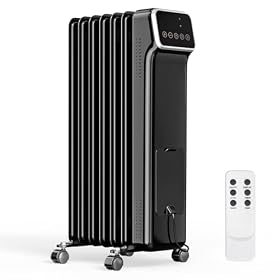
A space heater tip-over switch usually cuts power because the heater is not sitting level, its base or sensor is obstructed, or the unit has an internal fault. Follow these safe checks before deciding whether the heater needs replacement.
A space heater tip-over switch keeps cutting off when the heater detects that it is tilted, unstable, or not making the contact needed for normal operation. Unplug the heater, let it cool, and check the surface, base, airflow openings, and power connection before using it again. Do not tape down, bypass, or remove the safety switch.
1. Put the heater on a hard, level surface
Place the heater upright on a firm, flat floor. Avoid beds, couches, thick carpet, rugs with uneven surfaces, tables that wobble, and sloped areas. A small tilt may be enough to activate the switch.
Check that:
The heater is standing in its normal upright position.
All feet or base supports are fully seated.
The base is not cracked, bent, loose, or partly detached.
The floor does not rock when you gently press the heater from different sides.
If the heater works on a hard floor but shuts off on carpet, the surface or the heater’s base may be causing the problem. Follow the manufacturer’s placement instructions rather than adding an improvised platform.
2. Inspect the base and tip-over sensor area
With the unit unplugged, look underneath and around the base for dust, pet hair, small objects, or damage. Debris can keep a mechanical tip-over switch from moving normally. Remove loose debris without opening the housing or inserting tools into the heater.
Some heaters use a weighted or position-sensitive sensor inside the unit. If the heater has been dropped, hit, stored on its side, or transported roughly, the sensor or its mounting may be damaged. A damaged base or sensor is not a safe do-it-yourself repair unless the manufacturer specifically provides a service procedure.
Product prices and availability are accurate as of the date/time indicated and are subject to change. Any price and availability information displayed on Amazon.com at the time of purchase will apply to the purchase of this product.
3. Check the air intake and filter, if fitted
A blocked intake can cause the heater to overheat and shut down. This may be mistaken for a tip-over switch problem, especially if the heater turns off after running for several minutes rather than immediately.
Unplug the heater and check the intake grille and any removable filter. Clean only as directed by the manual. If the filter is washable, let it dry completely before reinstalling it. Do not operate the heater with a missing filter when the manufacturer requires one.
Keep curtains, bedding, furniture, clothing, and other objects away from both the intake and outlet. Never cover the heater or use it to dry clothes.
Product prices and availability are accurate as of the date/time indicated and are subject to change. Any price and availability information displayed on Amazon.com at the time of purchase will apply to the purchase of this product.
4. Check the power connection and setup
Plug the heater directly into a properly rated wall outlet unless the manual specifically allows another setup. Avoid extension cords, power strips, and shared outlets for high-wattage heaters because they can overheat or cause intermittent power loss.
Make sure the plug is fully inserted and the outlet is not loose, discolored, hot, or making crackling sounds. If the outlet or plug becomes hot, unplug the heater and stop using that circuit until it is checked by a qualified electrician.
Do not repeatedly reset the heater if it shuts off. Turn it off, unplug it, and allow the unit to cool for the period stated in the manual.
5. Determine when it shuts off
The timing can help separate a tip-over issue from an overheating or electrical problem:
It shuts off immediately after starting: Check level placement, the base, and the tip-over sensor area first.
It shuts off when bumped or moved: The heater may be unstable, or the sensor may be damaged or overly sensitive.
It runs for several minutes and then stops: Check blocked airflow, a dirty filter, high room temperature, and the heater’s thermal protection.
It shuts off and will not restart: Unplug it and consult the manual. A thermal cutoff, switch, control board, or other internal component may have failed.
It trips a breaker or makes unusual sounds: Stop using it and have the electrical problem evaluated. Do not keep resetting the breaker.
6. Try one careful reset
After checking the placement and airflow, unplug the heater and let it cool fully. Place it upright on a firm, level surface, reconnect it directly to the wall outlet, and try it once while you remain nearby.
If the tip-over switch cuts off again while the heater is clearly upright and undisturbed, stop using it. The switch may be defective, or the heater may have internal damage that cannot be confirmed safely from the outside.
Should you replace the tip-over switch?
For most household space heaters, replacing an internal tip-over switch is not a practical consumer repair. Opening the housing can expose live electrical parts and may defeat other safety features. Unless the manufacturer supplies an approved replacement procedure and the repair is performed by a qualified technician, replacing the heater is generally the safer option.
Replace the unit rather than continuing to reset it if the heater has a cracked base, damaged cord, burning odor, melted plastic, repeated false shutoffs, visible impact damage, or a history of getting wet. Choose a replacement with the safety features required by the manufacturer and use it exactly as directed.
Never bypass the tip-over protection, tape the switch in the operating position, or place the heater where it cannot fall safely. The switch is designed to reduce fire risk, even when it is inconvenient or appears to be malfunctioning.
Why does my space heater turn off even when it is upright?
The heater may be on an uneven surface, have a damaged or obstructed base sensor, or be shutting down from overheating rather than from the tip-over switch. Check placement and airflow with the heater unplugged. If it still shuts off while level and undisturbed, stop using it and replace or professionally service it.
Can I bypass a space heater tip-over switch?
No. Do not tape, wedge, disconnect, or bypass the switch. It is a safety feature intended to cut power if the heater falls or becomes unstable.
Why does my space heater shut off after running for a few minutes?
Delayed shutdown is often related to restricted airflow, a dirty filter, blocked grilles, excessive room temperature, or thermal protection. Clean the unit only as directed, provide the required clearance, and stop using it if the problem continues.
Is it safe to use a space heater that keeps cutting off?
Only perform the basic unplugged placement and airflow checks described in the manual. If the heater shuts off while upright, has damage, smells hot or burnt, trips a breaker, or behaves unpredictably, unplug it and replace it or have it evaluated by a qualified professional.